Showing posts with label pictures. Show all posts

Monday, July 4, 2011

Olallie State Park

Olallie State Park is located near Seattle, Washington, and I decided to practice taking nature photographs, since most of my recent work has been in cities. 

Twin Falls, as park of the park, is forty-one meters high.&


Thursday, June 30, 2011

Mount Tolmie Park

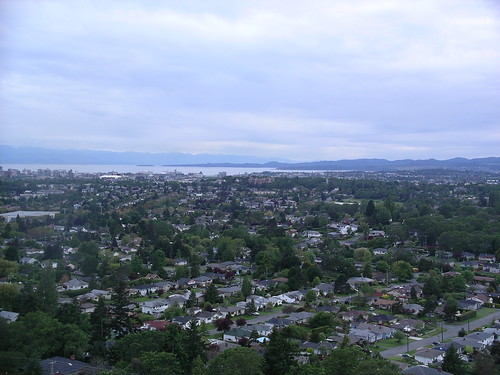
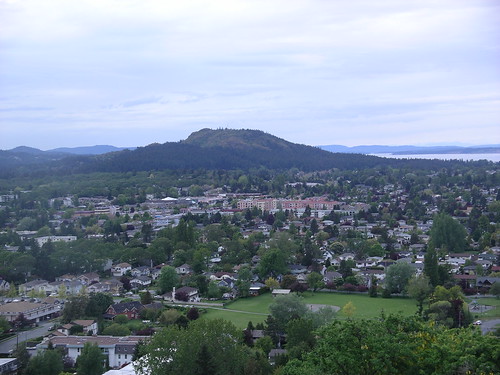
I recently was able to wander around Victoria, Canada, and I thought I'd share some of my pictures with everyone. This first set of pictures were taken in Mount Tolmie Park, which overlooks the city.
Tolmie Park was first concieved of in 1937, when people began making efforts to conserve the surrounding area. The last set of improvements were made last year, in 2010. It is the highest peak in the Bowker Creek watershed. The part has 1150 miles of trail, most of which lead up to the summit. There are fifteen mammal and thousands of different insect species that call the park home, in addition to other creatures.
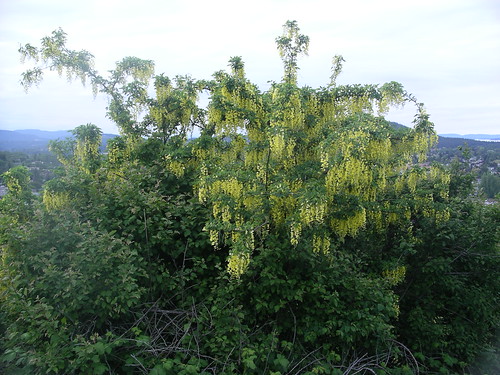
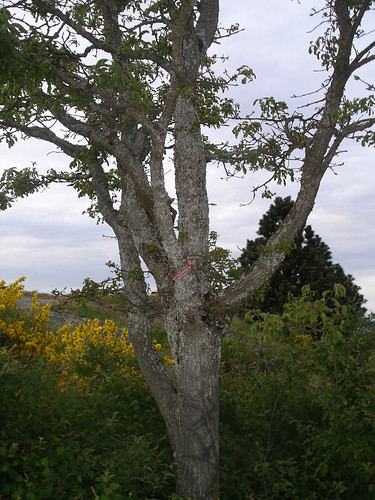
IMGP4449


This is a Garry Oak, the only tree native to this area. Other fauna in this area include western buttercups and licorice ferns.
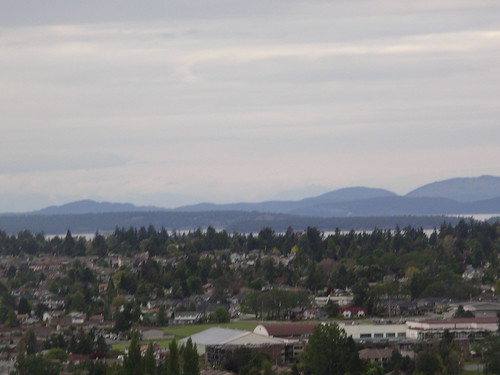
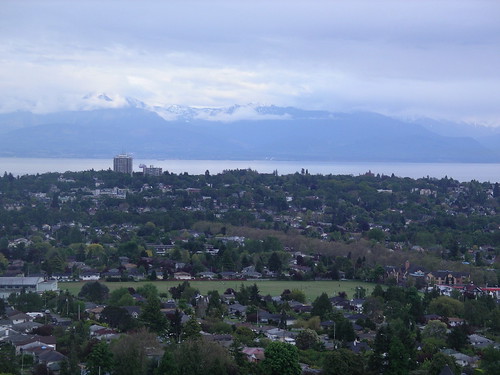
4457 The summit is a great place to see some of the other surrounding geography, including Mount Douglass. Unfortunately, on the day I was up there to take this picture, you really couldn't see anything that far away. Even so, the view was glorious.


The park has a mass every Easter Sunday at the summit, and I'm assuming this is the venue. I really hope this gets used more often than just once a year, as I think it would be a great place to have poetry readings at dawn or dusk.
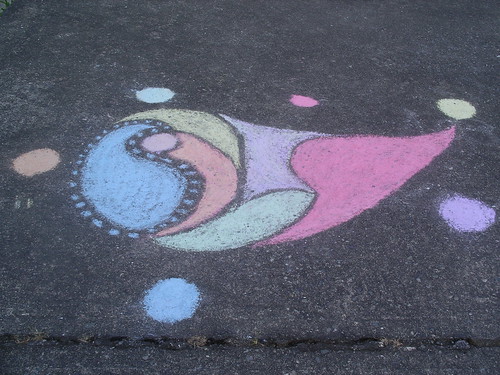


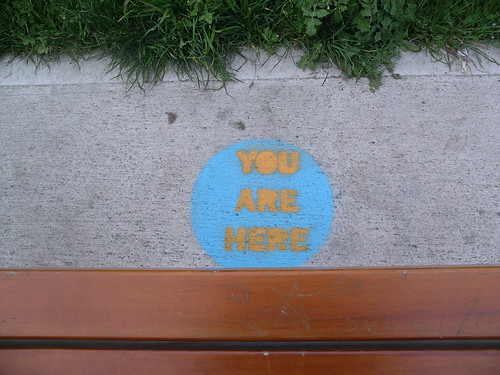
A delightful bit of sidewalk art. I really love the color choices.
4455 The rock at the summit, with labels telling you what direction everything is in. Among other things, this plaque indicates where Seattle, Mount Douglass and even where Port Angeles is, which is probably now most famous for being one of the towns featured in the Twilight series.
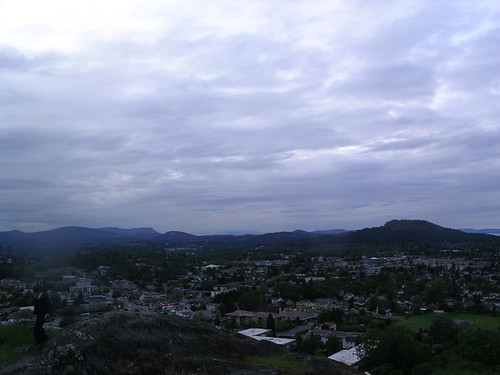


I like how dark and forboddening the clouds are in this picture.


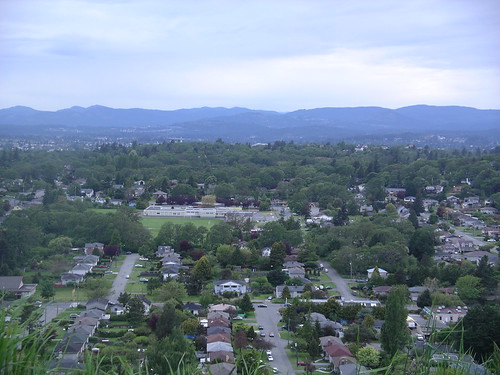
About 30 percent of the Bowker Creek Watershed is covered by things like roads and parking lots.
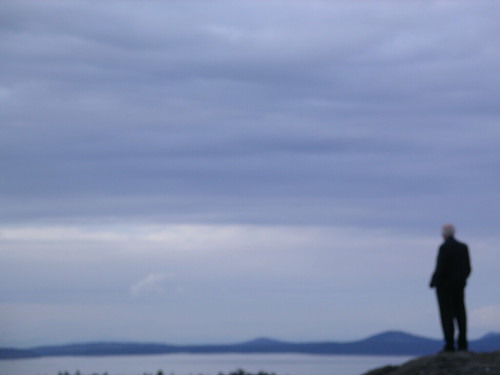


I had the opportunity to meet this older man while on my travels. He told me that he was a retired preacher. He's one of the more colorful and delightful people I've gotten to know. (And I will admit, if he was still preaching, I'd go to his church.)
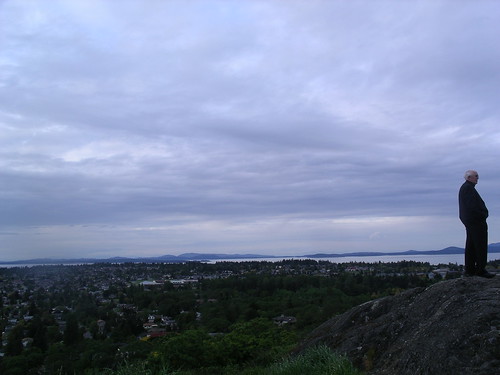


He scrambled right up to the top of this rock, without reservations and without the need for help.
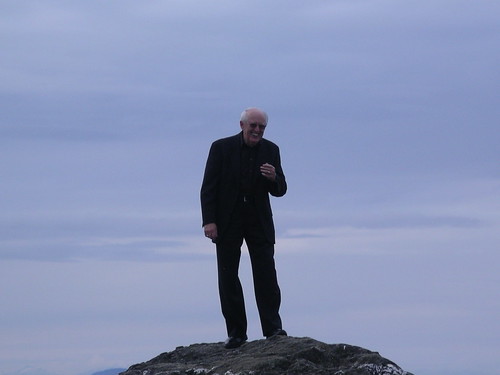


The preacher again. Look at that wonderful smile!
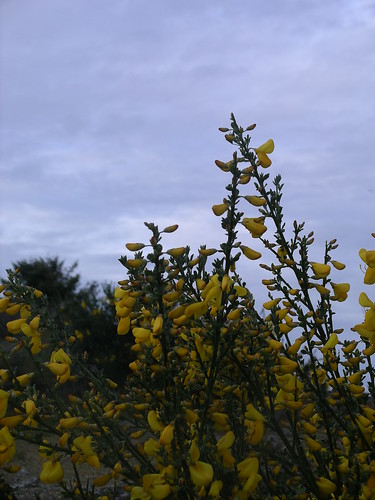


Are these perhaps those western buttercups that are a part of Mount Tolmie's ecosystem?
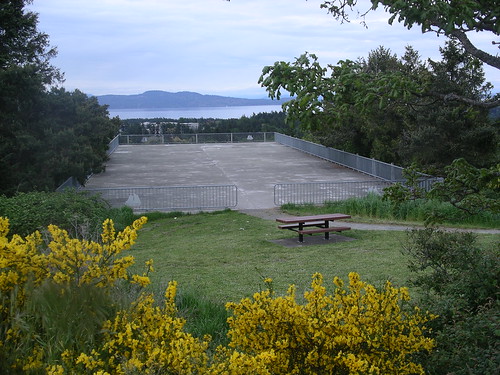


The reminder I needed.
I also have pictures of the Empress, the famed hotel near Mount Tolmie Park, posted on my Flikr page if you are interested.

Wednesday, June 29, 2011

Glass Making

Recently, I had the opportunity to sit in on and participate in glass making. Although I love glass and think it can be a beautiful artistic expression, previous to this, I did not know much about it.
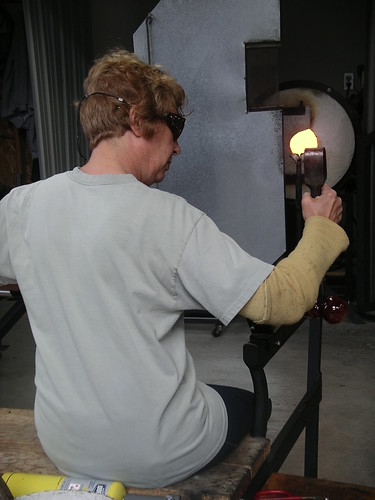
In the beginning, the glass is heated on a pike in an oven. Then, other various colored glasses are attached onto the first, uncolored glass, then heated along with it. This forms a soupy-looking glass end on the pike.


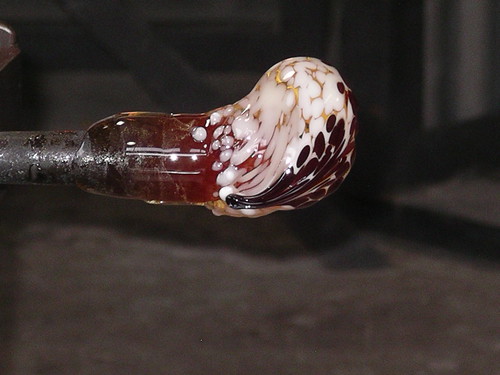
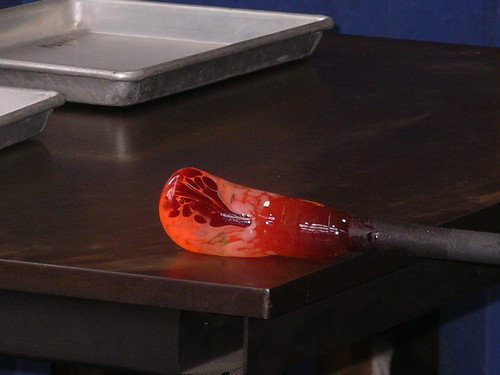
At this point, techniques for adding designs into the glass come in. In this picture, you can see various little dots all over the glass. If the glass was left unmanipulated, it would simply come out covered in colored spots. Here, the artist has pulled down part of the glass at the top, farther away from the pike, down closer to the pike. This will create what is called a drape look. Only one drape has been added to this glass at this point, but typically artists add multiple drapes.


After the drapes have been added into the glass, it has to be reheated in the oven. This particular kind is referred to by artists as "the glory hole." (Glass artists were, up until the 70s, completely male, and this comes out sometimes in their choice of terminology.)


After being reheated, the glass has to be rolled again. The glass here is being rolled on a steel table, which absorbs much of the heat and cools it down again. If you look closely, you can clearly see one of the drape pulls in the design.


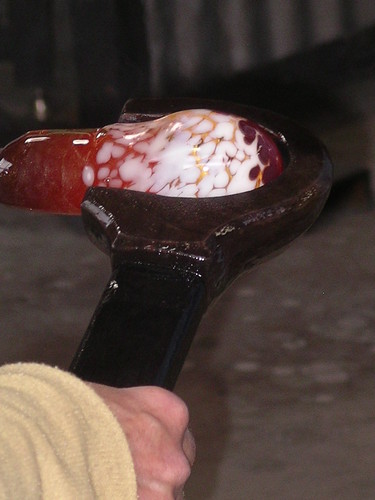
The glass is then rolled and reshaped with a wood bowl that looks similar to a spoon. The bowl sits in a bucket of water when it is not in use, and sometimes artists will redip the bowl while working with glass. This particular bowl is cheery, which is the kind preferred by glass artists, though any fruit wood works.


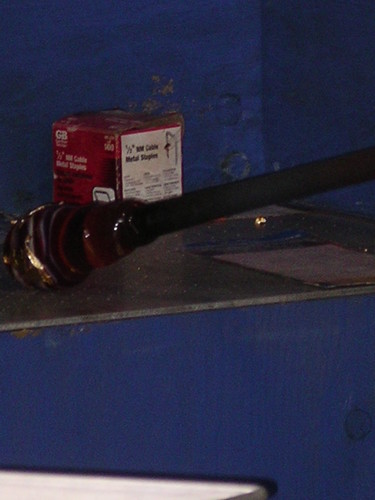
One of the last steps this artist chose was to add gold leaf. The gold leaf has to be rolled on, similar to the glass that has to be rolled on at the beginning of the process. Gold leaf is always one of the last steps of the process because it would vaporize if exposed to too much heat.


Next, the glass is blown to its full shape. The pike is howled out. Sometimes a tube is connected onto the opposite end of the pike and the artist blows to give the glass its full shape. You have to blow fairly hard at the beginning, and you have to blow harder as you go because the glass is stretching out and cooling down, making it harder to manipulate. At the same time the glass is being blown, the pike is being rolled in place so that the glass is even. (This is similar to working a pottery wheel, where the bowl is moving so that the designs will be even.)
As always, there are additional pictures on my Flikr page.

Friday, March 11, 2011

The Littlest Rolling Pins You Ever Saw

Nid d'abeille posted these amazing tiny rolling pins. When I saw the first two pictures, I just thought they were normal sized rolling pins, but then when I got to the third picture, I was totally impressed.
I have terrible eyesight so I cannot imagine making things like these.

Friday, February 4, 2011

Snow Creations

It's been snowing so much this year. I've been tickled by all the snow creations that people have been making. Here's some of my favorites.

Classic snowman, which were harder to find on the ground that you think. Love that he's rocking a pipe Sherlock Holmes-style.

It's a dragon! Or maybe a dinosaur. With carrots for spikes.

I guess this is an alien snowman. Doing the peace sign salute that Nixon perfected. Possibly that's a second head on him too.

Everyone was getting into the spirit of enjoying the snow creatures.

Snow mice or maybe rats. I love how they've all congregated on top of a picnic table. Typical snow rat thing to do.

One snow rat is even desperately trying to get up onto the table. I watched multiple people make snow mice and then leave them all together.

"Same thing we do every night, Pinkie. Try and take over the world."

I'm totally impressed by the shape of this monster's mouth.

This guy was huge. Someone had even detailed scales in.

Monday, January 17, 2011

National Museum of the American Indian

Most people use Martin Luther King Jr.'s Birthday as a free day off. And maybe I'm just in the wrong circles, but I never hear of a rally or other events/ideas to celebrate King's legacy and life. This year I wanted to do something specifically to celebrate him, to educate myself and to think about the future of people of color.
What I ended up doing is going to the National Museum of the American Indian. I realize, of course, that King was African American, but King was not fighting for just civil rights for African Americans, and his cause inspired other people of color to demand justice and equality. If King had survived his shooting, he would probably be proud to see his words inspire other activists fighting for other minorities.
Moreover, I feel like I have a personal blind spot when it comes to Native American culture. Not on purpose, of course, but I do not know much about the differences between nations. So going to this museum was an attempt to spend some time, in honor of King's work, educating myself. I wanted to post some pictures I took and share some of the assorted thoughts I had.

The first floor of the museum had this wonderful collection of everyday items Native Americans made. Obviously, this is a bowl. (I am having trouble discerning my notes, but I believe this is from either the Lakota or Dakota. At the very least, it's Sioux.) The artist who created this did a great job capturing the animal's likeness.


This is a set of playing cards. After having contact with Westerns, Native Americans adopted some of their games and changed them. Games were also played by Native Americans to settle clan disputes, which made me think about how some Southern African people would use poetry as a way to battle one another without actually shedding blood.

I believe this is a cribbage game.


The dramatic lighting in the museum. The museum is located in a historical, Beaux-Arts building.

A more modern piece of art the greets you when you first walk in the museum.
There were a lot of omissions at this museum. I realize most people do not want to talk about the issues affecting living Native Americans, like all the problems that plague reservations, but there was not even a discussion of the horrible things that happened to Native Americans as part of the U.S. attempts to "civilize" them, just brief mentions here and there of them being moved against their will to places like Oklahoma. This is a huge gap in history to ignore, and important one.
I also wish there was some discussion of what modern life for Native Americans is like. There was art from contemporary Native Americans (which was very cool), but it had muted political quality, and a fair amount of it, displayed in another context and without information, could have been seen as non-political art.
I have more pictures on Flikr and I wrote a longer review of the museum on my review blog.