Thursday, June 30, 2011

Mount Tolmie Park

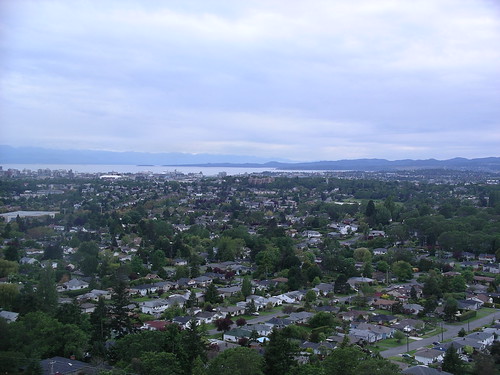
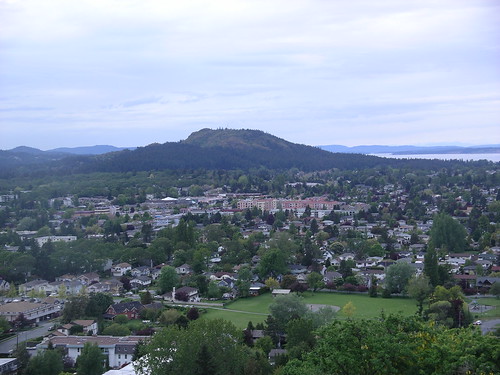
I recently was able to wander around Victoria, Canada, and I thought I'd share some of my pictures with everyone. This first set of pictures were taken in Mount Tolmie Park, which overlooks the city.
Tolmie Park was first concieved of in 1937, when people began making efforts to conserve the surrounding area. The last set of improvements were made last year, in 2010. It is the highest peak in the Bowker Creek watershed. The part has 1150 miles of trail, most of which lead up to the summit. There are fifteen mammal and thousands of different insect species that call the park home, in addition to other creatures.
IMGP4449


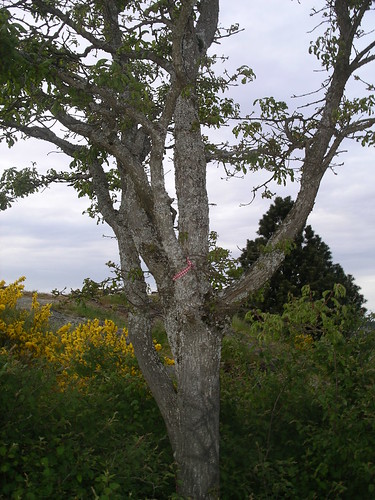
This is a Garry Oak, the only tree native to this area. Other fauna in this area include western buttercups and licorice ferns.
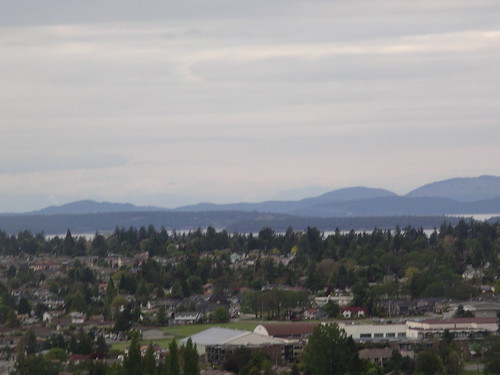
4457 The summit is a great place to see some of the other surrounding geography, including Mount Douglass. Unfortunately, on the day I was up there to take this picture, you really couldn't see anything that far away. Even so, the view was glorious.


The park has a mass every Easter Sunday at the summit, and I'm assuming this is the venue. I really hope this gets used more often than just once a year, as I think it would be a great place to have poetry readings at dawn or dusk.
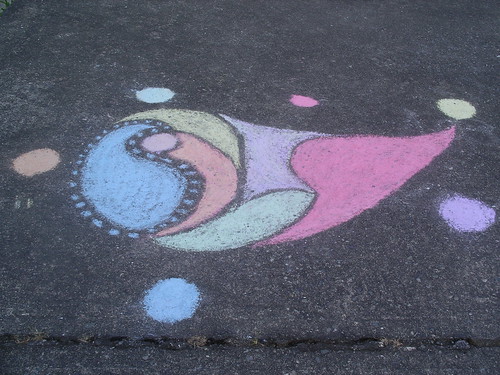


A delightful bit of sidewalk art. I really love the color choices.
4455 The rock at the summit, with labels telling you what direction everything is in. Among other things, this plaque indicates where Seattle, Mount Douglass and even where Port Angeles is, which is probably now most famous for being one of the towns featured in the Twilight series.
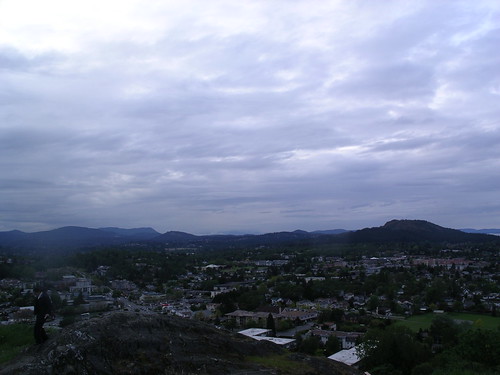


I like how dark and forboddening the clouds are in this picture.
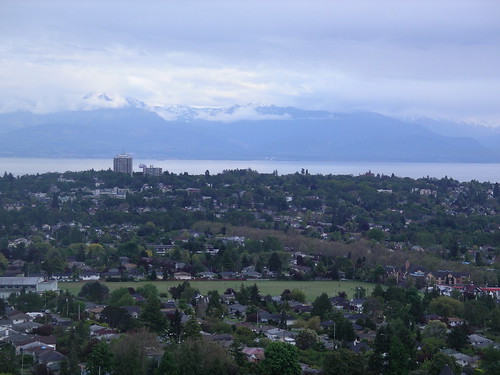


About 30 percent of the Bowker Creek Watershed is covered by things like roads and parking lots.
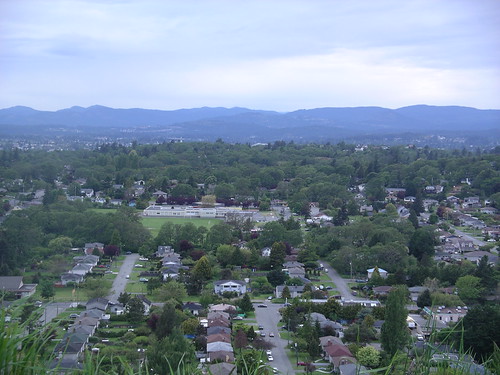
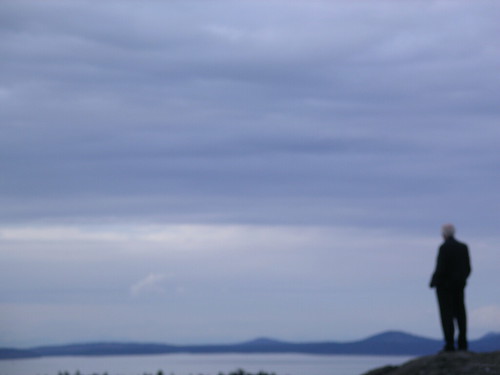


I had the opportunity to meet this older man while on my travels. He told me that he was a retired preacher. He's one of the more colorful and delightful people I've gotten to know. (And I will admit, if he was still preaching, I'd go to his church.)
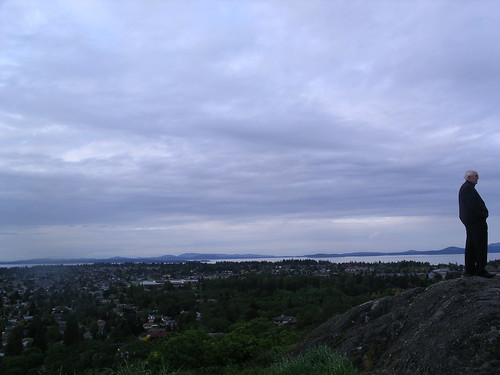


He scrambled right up to the top of this rock, without reservations and without the need for help.
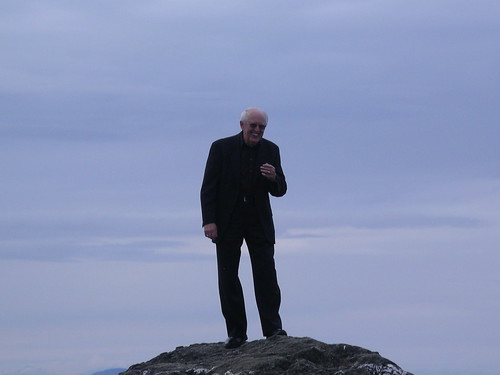


The preacher again. Look at that wonderful smile!
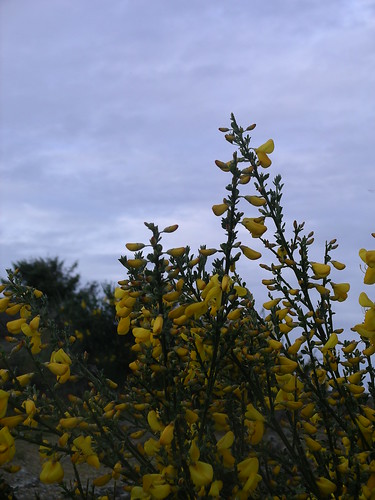


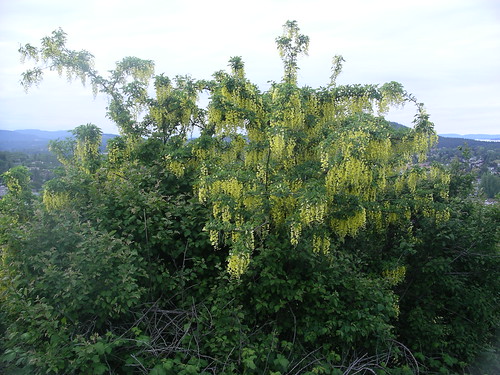
Are these perhaps those western buttercups that are a part of Mount Tolmie's ecosystem?
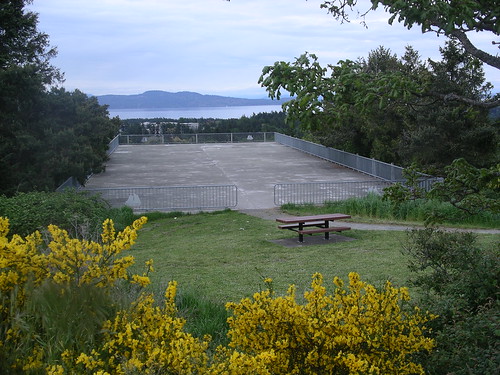


The reminder I needed.
I also have pictures of the Empress, the famed hotel near Mount Tolmie Park, posted on my Flikr page if you are interested.

Wednesday, June 29, 2011

Glass Making

Recently, I had the opportunity to sit in on and participate in glass making. Although I love glass and think it can be a beautiful artistic expression, previous to this, I did not know much about it.
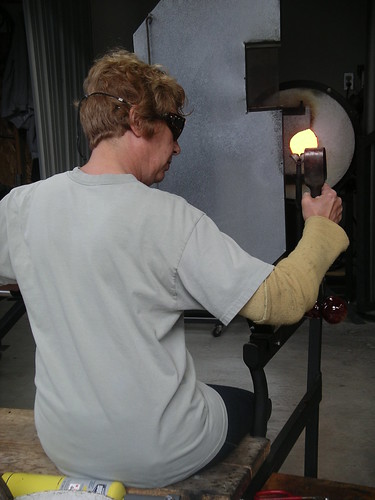
In the beginning, the glass is heated on a pike in an oven. Then, other various colored glasses are attached onto the first, uncolored glass, then heated along with it. This forms a soupy-looking glass end on the pike.


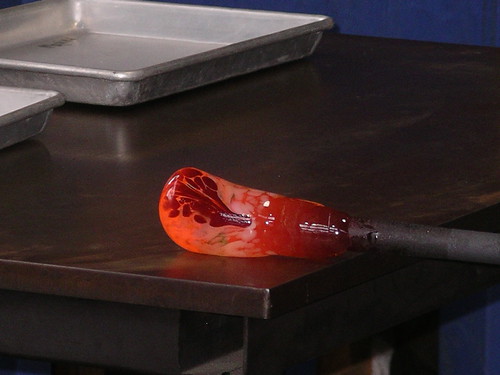
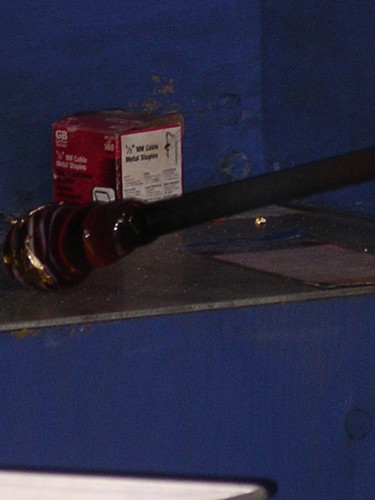
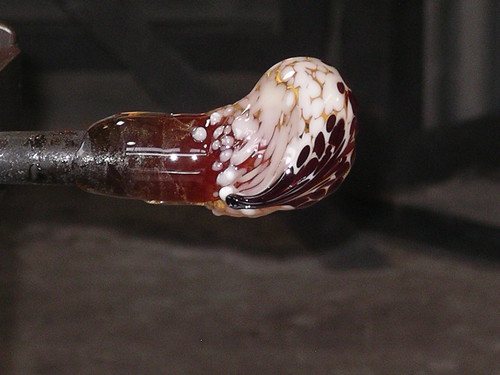
At this point, techniques for adding designs into the glass come in. In this picture, you can see various little dots all over the glass. If the glass was left unmanipulated, it would simply come out covered in colored spots. Here, the artist has pulled down part of the glass at the top, farther away from the pike, down closer to the pike. This will create what is called a drape look. Only one drape has been added to this glass at this point, but typically artists add multiple drapes.


After the drapes have been added into the glass, it has to be reheated in the oven. This particular kind is referred to by artists as "the glory hole." (Glass artists were, up until the 70s, completely male, and this comes out sometimes in their choice of terminology.)


After being reheated, the glass has to be rolled again. The glass here is being rolled on a steel table, which absorbs much of the heat and cools it down again. If you look closely, you can clearly see one of the drape pulls in the design.


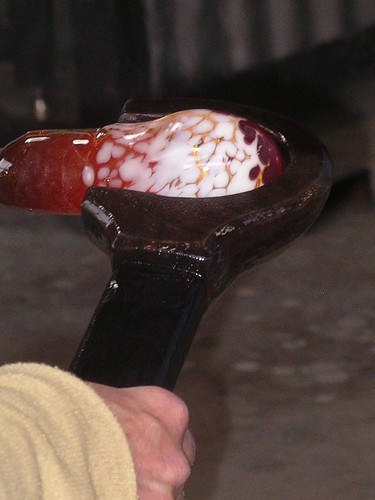
The glass is then rolled and reshaped with a wood bowl that looks similar to a spoon. The bowl sits in a bucket of water when it is not in use, and sometimes artists will redip the bowl while working with glass. This particular bowl is cheery, which is the kind preferred by glass artists, though any fruit wood works.


One of the last steps this artist chose was to add gold leaf. The gold leaf has to be rolled on, similar to the glass that has to be rolled on at the beginning of the process. Gold leaf is always one of the last steps of the process because it would vaporize if exposed to too much heat.


Next, the glass is blown to its full shape. The pike is howled out. Sometimes a tube is connected onto the opposite end of the pike and the artist blows to give the glass its full shape. You have to blow fairly hard at the beginning, and you have to blow harder as you go because the glass is stretching out and cooling down, making it harder to manipulate. At the same time the glass is being blown, the pike is being rolled in place so that the glass is even. (This is similar to working a pottery wheel, where the bowl is moving so that the designs will be even.)
As always, there are additional pictures on my Flikr page.

Tuesday, June 28, 2011

Jack Detroit's Leah Moss

There's a wonderful interview with Jack Detroit's Leah Moss. Moss founded the men's magazine about a year ago, and it launched in May.
I love what she says in the interview about how vibrant Detroit is, and how it could benefit from support. I hate encountering the negative attitudes about the city, especially when it comes from people who have never been there and are relying on what they see on television.
I love her choice in the name Jack Detroit. I'm not sure how intentionally it was, but it makes me imagine a savvy, stylish art thief.
Congratulations, Ms. Moss, on the launch of your magazine!

Monday, June 27, 2011

"Long Way Down" by the Goo Goo Dolls

My friend Carrie showed me this performance of the Goo Goo Dolls doing "Long Way Down."
The Goo Goo Dolls are one of those bands I am vaguely aware of. I hear their songs when I am watching movies or sometimes at parties, but they are not a band I have ever listened to beyond those encounters.
This performance is changing my mind. I love 90s rock, and this is an almost perfect little slice of the sound that I liked in 90s rock, which was heavily influenced by pop but also the sort of pop rock that Nirvana was on its way to perfecting before they took a detour with In Utero. (That's not meant to be a criticism of In Utero, which I actually really love. It's one of those perfect albums.)

Radiohead's "No Surprises"


In the few months since Radiohead has released their latest album, The King of Limbs, I've been listening to it nonstop. Eventually, I am going to have to sit down and write my thoughts on this album down, but in the meantime, I've been reviewing their older work.
"No Surprises" is so pop in comparison with their newer work; it is hard to imagine this band, writing a typical 90s pop song, would turn out much more experimental pieces that often were not songs so much as audible landscapes. Reviewing Radiohead's career, I find myself thinking of The Beatles, who started writing fairly basic pop songs at the beginning of their career, ones that fit in with other music at that time, and as the years went on, they became stranger, putting out albums like The White Album and Yellow Submarine. And like the Beatles, Radiohead's earlier, less experimental work is still delightful and just as perfect.
I'm just crossing my fingers that Radiohead doesn't break up.

Sunday, June 26, 2011

"Willy Loman: A Cataloge Poem"

Joel E. Jacobson recently published "Willy Loman: A Cataloge Poem" on his blog.
I really like the idea of writing a poem from the perspective of a literary character, or any character for that matter. Robert Browning famously perfected the idea of writing poems as monologues from characters who defined themselves as the poem progressed, particularly in his poems "My Last Duchess" and "Fra Lippo Lippi."
I love the phrase "faded like a bad TV show." That's a great description.
I also love the image at the end of this poem, where the miscellaneous material of capitalism creates a self-annihilating device. Nice.

Saturday, June 25, 2011

British Titles for Sale


Read this fascinating article about how various British titles are being sold off. As much as I am wary of British nobility, I am curious as to what it is like to have these titles in the modern world, especially since multiple tiles are currently or will be on sale soon, including " Lordship of Elrington in Northumberland, Lordship of Showell in Oxfordshire...Lordship of Grateley in Hampshire" and "Lordship of the Manor of Manaton." This last one was apparently the inspiration behind the Sherlock mystery of "The Hound of the Baskervilles."
Manor of Manaton could easily become one of those touristy places, where mostly non-British people come to see the house from the Hound of the Baskervilles.