Showing posts with label feminism. Show all posts
Showing posts with label feminism. Show all posts
Tuesday, March 13, 2012
Inspiring Women Scientists
For those of you in or near New York City, the Feminist Press, the National Science Foundation and CUNY Graduate School will be hosting the Inspiring Women Scientists Forum at the CUNY Graduate Center on the 21st of March, from 9 AM to 6 PM. Among other things, one of the speakers, Jill Tarter, is from the SETI project. The forum and registration are both free.

Monday, September 19, 2011
Report Cards from the Manhattan Trade School for Girls
Slate has this wonderful ongoing series on report cards from the Manhattan Trade School for Girls. A journalist found a collection of postcards in 1996, and thirteen years later begins researching the women behind these records.
These stories are extraordinary. Many of them were poor and some had disabilities, yet many managed to provide for themselves and their families. They struggled with strange employers and low wages. Some of them got married and had children. Education for women was not always readily available, and so anything that allowed women to work as their own bosses made an impact on their lives. These are the sort of women who are often forgotten by history and their lives are harder to document because there are less primary sources, but this series of articles remind readers of their existence and realities, ones difficult and courageous.
In addition to this, seeing these report cards reminds readers how these were truly everyday people. Recently, I got to see my Grandmother's transcript and yearbook picture from when she was in college. It was striking to see her grades and classes, which were closer to mine than I realized. She had never mentioned how much music she had taken, or that her minor was in English (which was my major). Even her haircut managed to be both in style for the time and terrible embarrassing. I can imagine both the delight and surprise these report cards gave families, reminding them that even Mom or Grandma once had a class she just could not stand.
These stories are extraordinary. Many of them were poor and some had disabilities, yet many managed to provide for themselves and their families. They struggled with strange employers and low wages. Some of them got married and had children. Education for women was not always readily available, and so anything that allowed women to work as their own bosses made an impact on their lives. These are the sort of women who are often forgotten by history and their lives are harder to document because there are less primary sources, but this series of articles remind readers of their existence and realities, ones difficult and courageous.
In addition to this, seeing these report cards reminds readers how these were truly everyday people. Recently, I got to see my Grandmother's transcript and yearbook picture from when she was in college. It was striking to see her grades and classes, which were closer to mine than I realized. She had never mentioned how much music she had taken, or that her minor was in English (which was my major). Even her haircut managed to be both in style for the time and terrible embarrassing. I can imagine both the delight and surprise these report cards gave families, reminding them that even Mom or Grandma once had a class she just could not stand.
Tuesday, August 30, 2011
Packaging Girlhood
Packaging Girlhood is a really interesting blog that dissects the things that are advertised to girls, both in terms of the products themselves and the subtle messages those things send. I do not necessarily agree with everything that this blog highlights, but it is important that feminists think about the way young girls are taught certain ideas about their career opportunities, bodies and other issues, and that we combat the ideas that oppress women by offering positive, empowering images and ideas to girls at the beginning of their lives.
Friday, August 26, 2011
Amy Levy
 My undergraduate thesis was on "forgotten" 19th century female poets. Although in the initial stages of research I worked on British women, I ended up focusing on American women, including Francis E.W. Harper. That said, I was shocked at how many women were writing and were known as writers. (I was unsurprised by the amount of poems published by "A Lady" or some other basically untraceable name.) One of these women happened to be Amy Levy.
Levy's life was fascinating. Her first novel, Romance of the Shop, focused on the conditions of the "new women," women who refrained from marriage and instead pursued careers. Her novel would make an excellent study, both from a literary and historical perspective, of how women grappled with a society that looked down on their choices. Other of Levy's writings are probably worth exploring, since her novel Reuben Sachs dealt with the Jewish community in London.
Sunday, August 21, 2011
Not Sexist, But
As a feminist, it is really frustrating to try to explain to people the way in which sexist ideology is part of so much of our lives. I'm Not Sexist, But website collects Facebook posts that use this exact phrase. Each individual post contains all sorts of problematic ideas, like implying that a woman's sexuality is morally wrong, that women are incompetent at their jobs, and that women's emotions are irrational or irritating. Collected together, this is a great site to point people to, since it shows the ways people are sexist in one of the forums that have become such a normal part of our modern lives.
The site also posts great feminist ideas every Friday, because not everyone is sexist.
The site also posts great feminist ideas every Friday, because not everyone is sexist.
Wednesday, August 17, 2011
A Museum of One's Own
For those of you who regularly read this blog, I am a museum nerd. I love going and sometimes even review them. I also am a feminist, and I love the idea of a National Women's History Museum. Women's history is an essential part of history, but one that is often forgotten or marginalized. Men frequently wrote the primary sources that historians pull from and since most societies were patriarchies, this meant that women stories often went untold, and if they were, they were from a male view.
A museum is a great way to celebrate and educate museum-goers on the achievements and struggles of American women. Even though there are a few women-centic museums and homes, like the National Museum for Women in the Arts, women have made achievements in other fields too, and despite a few (male) senators beliefs women are all about reproduction and thus a museum is not necessary.
A museum is a great way to celebrate and educate museum-goers on the achievements and struggles of American women. Even though there are a few women-centic museums and homes, like the National Museum for Women in the Arts, women have made achievements in other fields too, and despite a few (male) senators beliefs women are all about reproduction and thus a museum is not necessary.
Tuesday, June 21, 2011
Feminsim and Snow White
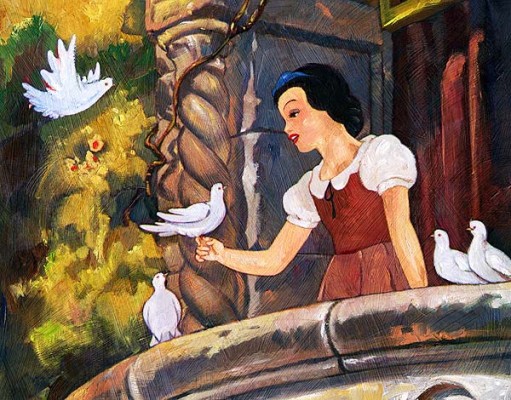
What intrigues me most about this project is that there have been significant additions to the main character. In this version, she apparently will be actively fighting to regain her kingdom and will wear armor.
Like a lot of other women, as a girl I went through my princess phrase. And one of the plots that I always found the most fascinating to read about concerned young women who were stripped of their rightful inheritance and often exiled or locked up. (It should also be noted that sometimes these things happened because they were women and their social status was inherently limited.) The young women struggled to take back what was their's. This occurred historically with princesses like Cleopatra, who spent two years in Rome or fictionally with characters like Rapunzel, who was locked up for reasons various authors have imagined. Unfortunately, these princess tales of going out and getting what you want are few and far between, usually focusing on a passive woman who has to be rescued by a man, and often featuring other, older, unmarried women who are evil.
I can't wait to see where these people take this movie. I'm hoping it will be feminist in the sense that it will empower young women to seek out reclaiming their own "kingdoms."
Monday, April 4, 2011
Difference Makers
| The Colbert Report | Mon - Thurs 11:30pm / 10:30c | |||
| Difference Makers - Roy Den Hollander | ||||
| ||||
Where to even begin with this clip from The Colbert Report? It is so wonderful to have people parody anti-feminism.
It's hard for me sometimes to believe these people even exist, because the politician profiled here is so clearly offensive. It's totally telling that when Roy lists the men he defends, his version of "diversity" within men includes African American men and heterosexuals. No one seems to have informed him of the diversity within those who have identified male, or that the gender binary is a social construct and not necessarily representative of people's authentic identity. Feminism, for him, is apparently capitalist-driven interest to encourage women to visit bars, which is totally besides the point of such important gains and battles feminism has yet to win. This man's problem shouldn't be with feminism but with why women don't go to bars, which, if I had to guess, has more to do with issues of safety, which, by the way, feminism is always looking to improve.
Monday, March 28, 2011
Why Girls Should Read: Romance and Feminism: A Manifesto
My friend Lauren pointed me towards this little piece called You Should Date an Illiterate Girl, which is about girls and literacy and romance, and weirdly, calls out feminism.
Regarding my heterosexual friends, I have observed more than a few friends in my life in relationships they are not passionate about. This makes me sad for them, and also for the people they are with. Once you have had that passion, even if it is unrequited, everything else palls in comparison. It is like listening to pop music after weeks of Girl Talk on endless loop: everything is simple, and in a bad way, in a where-did-all-the-riches-go? way. And when you see people who aren't really passionate about each other, who are with each other people so that they aren't alone, who are getting married because it's apparently that time in their life, who are with someone so they don't have to think about the other someone they actually want to be with but has broken their heart and left them to pick up the pieces, I concluded that "romance" for so many people is about having the wrong priorities. So I sympathize with this, because I feel these things too, even though I am generally not as poetic about them (except, hopefully, in my own poetry) and don't look at it holistically but as it applies to my own personal circumstances.
And then there's the feminism. I always find the intersection between romance and feminism to be interesting. If you read romance novels or see rom-coms, there are a lot of things that are disquieting about what love for women should be. Rom-coms are about a woman making a sacrifice. Rom-coms are about a woman realizing how wrong she is and how her guy friend who really wants her is right. Rom-coms are about a woman fixing herself to be acceptable to her true love and society as a whole. Oh, and if she just didn't have a career and ambition and thoughts, then really, she'd find it easier to find someone. I like that this piece subverts that, explaining that no, men, you don't want a dumb, unread, unromantic woman; you want one who is thoughtful and reflective, who is brave and smart enough to take care of herself. Because if she's not smart enough to take care of herself, she won't really take care of you either. If she's not able to be brave for herself, she won't be brave about you. If she's not thoughtful enough about who she is and needs, she won't think about who you are or what you need. And for heterosexual women, this is the same thing. If a man isn't capable of realizing how valuable you are and how special you are and how deserving you are of someone who loves you truly, fully, and for your gifts and not just as a ploy to stave off loneliness, then you shouldn't be with him. As a feminist, I know the value in teaching women not to be "selfish," as it is so wrongly called, but to be self-aware and to assert their needs. As a romantic, I want people to find each other and work for their relationship, but I am often disappointed and saddened by romances that are more about boy-meets-girl, girl-subverts-herself-for-man-or-else-is-alone stories and images. I want there to be such a thing as romantic feminists or feminist romantics, who see the problems between these two things and subvert the anti-woman "romances" out there and make women who are happy and well-adjusted and have agency in their lives as sexy as I know it is for those of us who experience and strive to experience it.
Regarding my heterosexual friends, I have observed more than a few friends in my life in relationships they are not passionate about. This makes me sad for them, and also for the people they are with. Once you have had that passion, even if it is unrequited, everything else palls in comparison. It is like listening to pop music after weeks of Girl Talk on endless loop: everything is simple, and in a bad way, in a where-did-all-the-riches-go? way. And when you see people who aren't really passionate about each other, who are with each other people so that they aren't alone, who are getting married because it's apparently that time in their life, who are with someone so they don't have to think about the other someone they actually want to be with but has broken their heart and left them to pick up the pieces, I concluded that "romance" for so many people is about having the wrong priorities. So I sympathize with this, because I feel these things too, even though I am generally not as poetic about them (except, hopefully, in my own poetry) and don't look at it holistically but as it applies to my own personal circumstances.
And then there's the feminism. I always find the intersection between romance and feminism to be interesting. If you read romance novels or see rom-coms, there are a lot of things that are disquieting about what love for women should be. Rom-coms are about a woman making a sacrifice. Rom-coms are about a woman realizing how wrong she is and how her guy friend who really wants her is right. Rom-coms are about a woman fixing herself to be acceptable to her true love and society as a whole. Oh, and if she just didn't have a career and ambition and thoughts, then really, she'd find it easier to find someone. I like that this piece subverts that, explaining that no, men, you don't want a dumb, unread, unromantic woman; you want one who is thoughtful and reflective, who is brave and smart enough to take care of herself. Because if she's not smart enough to take care of herself, she won't really take care of you either. If she's not able to be brave for herself, she won't be brave about you. If she's not thoughtful enough about who she is and needs, she won't think about who you are or what you need. And for heterosexual women, this is the same thing. If a man isn't capable of realizing how valuable you are and how special you are and how deserving you are of someone who loves you truly, fully, and for your gifts and not just as a ploy to stave off loneliness, then you shouldn't be with him. As a feminist, I know the value in teaching women not to be "selfish," as it is so wrongly called, but to be self-aware and to assert their needs. As a romantic, I want people to find each other and work for their relationship, but I am often disappointed and saddened by romances that are more about boy-meets-girl, girl-subverts-herself-for-man-or-else-is-alone stories and images. I want there to be such a thing as romantic feminists or feminist romantics, who see the problems between these two things and subvert the anti-woman "romances" out there and make women who are happy and well-adjusted and have agency in their lives as sexy as I know it is for those of us who experience and strive to experience it.
Tuesday, February 15, 2011
McSweeney's Takes the Love out of Valentine's Day
I do not have a problem with Valentine's Day as a holiday, in theory. As a feminist, I do have a problem with gender roles, and Valentine's Day is often just another example of that. And I figured that someone yesterday would manage to anger me when it came to that.
Instead, I got angry because someone was making fun of the disabled, specifically the mentally disabled. McSweeney's reposted this piece, called "Obsessive Compulsive Valentines." Among other things, it actually has Valentines that sound like they are from a Paranoid Schizophrenic, but the entire idea is offensive.
The humor of this piece is apparently that those with a clinical disorder are funny, and also, by the way, inept when in comes to love. Anyone who has suffered from OCD (or a similar condition) knows that as hard as it sometimes may be to function, living with society's constant prods is even harder. Often it is people's assumptions and negative perspective that is more crippling that anything a disabled person has.
Instead, I got angry because someone was making fun of the disabled, specifically the mentally disabled. McSweeney's reposted this piece, called "Obsessive Compulsive Valentines." Among other things, it actually has Valentines that sound like they are from a Paranoid Schizophrenic, but the entire idea is offensive.
The humor of this piece is apparently that those with a clinical disorder are funny, and also, by the way, inept when in comes to love. Anyone who has suffered from OCD (or a similar condition) knows that as hard as it sometimes may be to function, living with society's constant prods is even harder. Often it is people's assumptions and negative perspective that is more crippling that anything a disabled person has.
Saturday, January 29, 2011
Ask Mormon Girl
Last week, Ask Mormon Girl made the announcement that she's been invited over to Mormon Feminist Housewives. Ask Mormon Girl is an interesting column talking about an often-misunderstood religious group, the Church of Latter-Day Saints. Joanna Brooks, the author, is a perfect fit for her new home. Congrats to Ms. Brooks!
Wednesday, November 3, 2010
Zubaan Books
People who aren't book people often don't think of books in terms of publishers or imprints, but book people often do. Book people are often proud to say what publishers they read.
As a book person, I love it when I come across a good publisher or imprint, especially if they are doing something interesting or different.
Zubaan Books publishes for and about Indian women. They have a wide range, from academic topics to stuff for young women. And, lucky for me, most of them are in English. (I, unfortunately, cannot read Hindi or Arabic or any of the 200 other languages that the nation claims.) The publishers are proudly feminist too, which is the best news of all.
As a book person, I love it when I come across a good publisher or imprint, especially if they are doing something interesting or different.
Zubaan Books publishes for and about Indian women. They have a wide range, from academic topics to stuff for young women. And, lucky for me, most of them are in English. (I, unfortunately, cannot read Hindi or Arabic or any of the 200 other languages that the nation claims.) The publishers are proudly feminist too, which is the best news of all.
Tuesday, August 10, 2010
Rebel Girl
There are few songs out there that I actually wish were written about me, mostly because I find men's need for a muse creepy and potentially misogynist. Which is why I'm always surprised when I find myself wishing I was the subject of a song. Enter one of Bikini Kill's greatest songs: "Rebel Girl."
Of course, what I like about this song is that the rebel girl in question is being admired not because she is beautiful but because "when she talks, I hear the revolutions." She is written off as a "dyke" by her community, even though her sexuality is not important; what's important is that she is fighting for change.
I know I would be okay with someone saying that about me.
Of course, what I like about this song is that the rebel girl in question is being admired not because she is beautiful but because "when she talks, I hear the revolutions." She is written off as a "dyke" by her community, even though her sexuality is not important; what's important is that she is fighting for change.
I know I would be okay with someone saying that about me.
Friday, July 9, 2010
The Anxiety of Influence
I was reading an article called Nancy Armstrong's "What feminism did to novel studies" and one of the things it mentioned early on in the article was something called the "anxiety of influence." As always when I hear something that I don't know about, I go out in search of answers.
 It also seems that, based on a lot of the modern poetry I read, that a lot of people are influenced by Wallace Stevens. I actually like Stevens a lot, but a lot of critics have complained over the years that he was "willfully difficult." I think there is some truth to it, but it's always struck me as a good thing, because then you have to work to understand his poems. You have to read them more than twice. Most of the other good poets I read now are like this, some to a greater degree than others. And I like this. I was tickled to discover the article summarizing Harold Bloom's theory mentioned Stevens, because he's the first person I thought of when I read the basic definition of the anxiety of influence.
One of my professors once mentioned that some people are more into theory than others. I am into theory, though I like to see it applied to works of literature, especially the kind I am familiar with, because then I have a much easier time seeing what theorists mean when they assert a particular claim. Seeing them apply an idea demonstrates they have thought the idea out and illustrates for readers how they should similarly apply the idea.
 To this end, I then wanted to do a little research into Gilbert and Gubar's feminist response to Bloom's idea. According to Armstrong's article, Bloom had imagined literature as a product of the oedipal struggles between father and son. Gilbert and Gubar, naturally, imagined how women fit into theory, since women have been producing literature too. Gilbert and Gubar decided that women's literature was always struggling with the male tradition of literature: they can't outright rebel from it but instead must demonstrate they can work within it.
One of the many complaints I've heard of women's literature over the years is that it never does anything new or daring. Maybe it's because we are forced into a defensive position, much like when dealing with something like the gaze. We're never able to just create art for the sake of creating art for ourselves or the way we want it. We have to create art that will earn the respect of our male colleagues.
I'm hoping, as women fight to have a better place within society, that these problems will (and hopefully already have) dissipated.
 I am also wondering if there is a way to complicate Gubar and Gilbert's response in some way involving something like race or sexuality. I think it would be easy to say that many people of color have also felt the need to earn their male (and also white) colleagues respect by working within the traditional rules of art. For example, I took a class a couple of years ago on the African diaspora, and the majority of things we read were written in a traditional novel or essay form. I'm wondering if those mediums were chosen not because they were necessarily the best mediums to communicate the message in or the because they were the creator's first choice, but because they were the forms that white men would respond best to. Sometimes we watched things that were avant garde in form, and some of my fellow students reactions were masked by their dislike of a medium they were unfamiliar with, covering up how uncomfortable the messages of the piece were.
I took a class on African history, and we read an essay by an African author who complained about how white American and European authors dominated the educational lives of Africans. When some of these Africans decided to be writers, they felt forced to write not in their own native languages but in their oppressor's language, just to have their ideas heard. It seems like, at least in this case, authors of color weren't creating the art they wanted to, they were were creating it based on the traditions and rules of the dominant power, similar to what Gilbert and Gubar talk about.

One of my professors once mentioned that some people are more into theory than others. I am into theory, though I like to see it applied to works of literature, especially the kind I am familiar with, because then I have a much easier time seeing what theorists mean when they assert a particular claim. Seeing them apply an idea demonstrates they have thought the idea out and illustrates for readers how they should similarly apply the idea.

One of the many complaints I've heard of women's literature over the years is that it never does anything new or daring. Maybe it's because we are forced into a defensive position, much like when dealing with something like the gaze. We're never able to just create art for the sake of creating art for ourselves or the way we want it. We have to create art that will earn the respect of our male colleagues.
I'm hoping, as women fight to have a better place within society, that these problems will (and hopefully already have) dissipated.

I took a class on African history, and we read an essay by an African author who complained about how white American and European authors dominated the educational lives of Africans. When some of these Africans decided to be writers, they felt forced to write not in their own native languages but in their oppressor's language, just to have their ideas heard. It seems like, at least in this case, authors of color weren't creating the art they wanted to, they were were creating it based on the traditions and rules of the dominant power, similar to what Gilbert and Gubar talk about.
Friday, July 2, 2010
Friday at the Library
I went in again for my library volunteer time. It was quieter than it was yesterday, but I figure that's because of the holiday weekend.
One of my friends, Shelby, came in. She and I worked together last year on The Offbeat. It turns out that she got on the Poetry Board for The Red Cedar Review. I congratulated her. She told me that they've already had their first meeting this summer, and that they've been working through their archive. (They're going to be publishing a retrospective issue this coming year.) It's good to hear that things have been going well for them.
I was asked to file student's papers, indicating the kind of reading they had done this Summer. It was mostly fine, but about ten students only had first names on their sheets, which made it hard to file. Luckily, one of the other librarians there had their registration forms, and tried to figure out which students had those papers.
The librarian asked me if I'd like to set up a database again of the information on the students. No problem, I said. So next week, when I get a chance to go in again, that's what I'll be doing.
Otherwise, I finished two more essays on feminism (one on feminism and autobiography and another on feminism and modernism) and then I read three chapters of Little Dorrit.
One of my friends, Shelby, came in. She and I worked together last year on The Offbeat. It turns out that she got on the Poetry Board for The Red Cedar Review. I congratulated her. She told me that they've already had their first meeting this summer, and that they've been working through their archive. (They're going to be publishing a retrospective issue this coming year.) It's good to hear that things have been going well for them.
I was asked to file student's papers, indicating the kind of reading they had done this Summer. It was mostly fine, but about ten students only had first names on their sheets, which made it hard to file. Luckily, one of the other librarians there had their registration forms, and tried to figure out which students had those papers.
The librarian asked me if I'd like to set up a database again of the information on the students. No problem, I said. So next week, when I get a chance to go in again, that's what I'll be doing.
Otherwise, I finished two more essays on feminism (one on feminism and autobiography and another on feminism and modernism) and then I read three chapters of Little Dorrit.
Thursday, June 17, 2010
Lips Unsealed

This always brings up an important issue in feminism: does one have to identify as a feminist to be one?
There's lots of things about Carlisle in this review that makes me feel like she is: she has meaningful friendships with women, she creates art that makes her happy, and she isn't interested in worshiping men, even the rock star kind. But the review makes a point of saying that she isn't one, which makes me wonder if she doesn't identify as one.
There are some good and bad reasons not to identify as a feminist. The bad ones include certain misogynistic politicians who liken feminism to every negative thing they can think of involving women. Buying into that logic and shying away from feminism just because of the misogynistic rhetoric that paints broad strokes against it only aids the enemy here, so that's no good. Not liking feminism because some self-identified feminists are racist, homophobic, ableist, etc., is a good reason, since sadly, there are "feminists" out there like that. Although I view feminism as another way to break power structures, a kin to fighting racism or being an LBGT ally, not everyone sees it that way, or uses it as a way to maintain things like white privilege (just, you know, a white privilege that includes white women.)
And then, of course, there's the flip of the coin: people who consider themselves feminist but are anything but. I could name some of them, but if you're reading this, you probably don't need help. You already know them: people who claim feminism as a philosophy or political belief but then espouse things like not funding rape kits for hospitals or pushing the women in their personal lives around or carrying on about how women should work harder at being sexy for their husbands, etc. It's annoying to say the least.
I hope, since I'm coming to admire certain things about Carlisle (having sex only when she wants to!) that she does identify as a feminist, at least now, because the movement needs women like her, the kind that are independent and understand what the entire point of feminism is.
Sunday, June 13, 2010
A Feminist Aesthetic of Reading
 A week ago, I read this article called "Pleasure, resistance and a feminist aesthetic of reading" by Geraldine Heng, which explored medieval literature and feminist interpretations of it. I've spent a lot of time working in medieval history, so I was impressed by Heng's writing on that history, since she covered a lot of ground in very little space. But I also liked the idea of looking at medieval writing from a feminist standpoint.
 In March, I read The Song of Roland, which is about Roland, a knight of Charlemagne, who defends a particular spot in the Pyrenees to the point where he and all his men die, but allow the rest of the troops to avoid being attacked by the Moors. (The Moors, in the words of one of my professors, is another way of saying "You, them there Muslims.") What bothered me about this story was, at the end, Charlemagne has to tell Roland's fiancee (who wasn't mentioned previously in the story) that Roland has died. Then this fiancee goes off and dies, with the writer implying she had nothing left to live for. Obviously, as a feminist, I don't like the idea of a woman being forced to marry, and I'm not a fan of the idea of women not having anything better going on in their life than a man, so this bothered me. Because I was reading The Song of Roland for a history class and I didn't have to write a paper on it, I kept these thoughts to myself. Even though Heng didn't discuss this work in her essay, I suspect she would probably have something to say about it.
 I'm also wondering how she would feel about literary interpretations of letters. I turned in an essay six weeks ago on the letters between Pope Gregory VII and Countess Matilda of Tuscany. Is it possible to see these in a feminist light, even though they are not the traditional idea of "literature"? Matilda obviously defended Gregory, but Gregory helped her as well. Since Heng advocates seeing women in medieval literature as both dependent on men but also with some degree of power themselves, I find myself wondering if I should see Matilda in the same light.
 I'm also wishing I could read the Vitas written about her by various monks, because those would come much closer to qualifying as literature. Vitas, or Lives, were basically biographies. They were usually written by men working within the church (as monks, abbots, bishops, canons, etc.) that tell a person's life story, emphasizing how saint-like they are. If they were written before they were canonized, the goal is to persuade readers they should be, and if they were written after canonization, it's because they wanted to use the person in question as an example of living one's life justly. There's been a lot of work by historians on these biographies in the last twenty to twenty five years, analyzing them using close reading, a technique that any English major worth their salt understands. So I'm wondering if it's possible to do something similar while working in English and not history.
I wasn't really looking to read these feminist essays in order to work on the issues between history and literature or feminist in medieval literature, but Heng's essay opened up a lot of really interesting thoughts for me.
Monday, June 7, 2010
Musings
 Today, I was in a doctor's office, and I happened to come across a recent issue of Smithsonian magazine where I found an article about the love of Mark Twain's life.
Considering the image of Twain as an old man with his dry wit (and, in the version I've constructed for myself, even drier gin), it's hard to imagine him ever in love, but then again, just the image of Twain as young man who had not yet written those beloved masterpieces is hard to fathom.
It's hard as a feminist to ever read these stories about those silent muses behind those great male writers. I always find myself wanting to know those stories, not about the cathartic love these men apparently had. I want to know is Lesbia was real, if she was Greek, what she thought about Catullus, if her favorite poem of his was my favorite poem of his. I want to hear Laura speak about being married so young, about being chased around by a poet. I want to see if Beatrice is as interesting as the vision based on her.
It's frustrating that women who were writers in their own right became muses to others (i.e. men.) Even when they were achieving so much, both creatively and politically, society tried to co-op them into a position they were more comfortable with: a silent figure of worship, an impossible standard of feminine perfection, a scale against which the creator measured himself. I always find that creator wanting.
Occasionally I come across relationships between creative men and women that does disappoint me so much. I really like that Elizabeth Barrett Browning and Robert Browning encouraged each other's work. I like that they were both published, respected poets in their own right before finding each other. I like that Robert Browning became enamored of her voice, not her silence.
Friday, June 4, 2010
Women Read
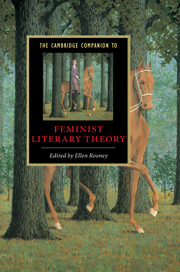 One of the projects I'm attempting to work on involves feminist theory. I'm reading parts of The Cambridge Companion to Feminist Theory, in order to educate myself about the issues. My hope is, after I finish this, I'll be able to move into reading selections of the theory itself, having the kind of background knowledge to make more sense of each individual work within a wider context. Even though I've taken classes on feminism and women in literature and read feminist blogs, I still feel like furthering my understanding of things is a worthy goal.
Working through the introduction, I stumbled upon an idea that I had never considered before, but it seems basic and obvious now. There was a short discussion about the effect of reading on women. One of the ideas surrounding reading is that it made women more likely to question the status quo. As someone who loves to read and thinks of herself as a questioner of the status quo, I obviously like this idea.
I was in that shaky area of brain space between wakefulness and sleep this morning, when I stumbled upon a refutation of that idea: Mr. Darcy Takes a Wife and Darcy and Elizabeth.

Some background: both of these books are part of a phenomenon within the Jane Austen fandom, where writers publish what are basically works of fanfiction, usually centering on the marital (bliss?) of Darcy and Elizabeth. I find these works interesting for several reasons, but I want to focus on one of the least discussed characters: Anne de Bourgh. Within these two works, Anne is shown reading books, and not just any books: Gothic romances, the kind of thing that feminists have long championed (like in the cult following around Jane Eyre). But in the novels, Anne is forced into a marriage by her mother, and her husband uses his marriage to her for his own financial gain. Anne dies in the second book after giving birth to a child, no one mourning in the least for her. She never escapes her abusive mother or negligent husband to live independently, as her own person.
This is problematic. At one glance, this could be interpreted as Berdoll, the author, criticizing Gothic romances for not really being as feminist as some say they are. I've often argued that point with Jane Eyre, complaining that for a so-called feminist novel, our heroine ends up with a guy who tricked, lied and manipulated her. But this could also be seen as a criticism of the idea that women who read are automatically going to be feminists.
There's a lot of proof, even in my personal life, of this. I have a few self-identified feminist friends who say things that are anything but feminist. ("Oh, well, that girl is exaggerating. She probably just wishes he was stalking her.") They have college educations, they read, and yet they're totally for the status quo. There are a ton of so-called feminists who love their white privilege and refuse to see that in furthering a "feminism" that is limited to white women, they are just furthering the same oppressive system. I've been frustrated on quite a few occasions by this.
So, does reading make a difference? It doesn't hurt. Women who read reap the normal benefits of reading: mental exercise, better sense of language, exposure to well-constructed arguments and varied points of view. Because of this, women are more likely to see the ways in which systems of oppression operate, and through that knowledge, work to bring them down.
I myself am proof that it makes a difference, since I began this project in an attempt to understand more about the world around me, and even though I wasn't even through the introduction of the book I'm reading, I've already found myself considering ideas inter-textually and constructing an argument about the validity of an argument. So sure, women read. Feminists question power and argue for greater inclusion.
Subscribe to:
Posts (Atom)