So I recently was reading this article on the beginnings of a new online magazine called Rookie, and they addressed a question that I've been wondering about for years now: are fashion and feminism inherently at odds with each other?
I ask this because there are so many magazines, online and in print, written towards young women that says yes. Jezebel, xojane, and (back in the day) Sassy feature both articles on fashion trends and feminism. At times, I really like this, since I would like to hope a young woman might get lured in by the fashion and come away with a little bit of feminist theory. Even if she is just more empowered in a practical way to be more assertive with men or to be proud of her body, then that is better than the alternative. But still, the models are so skinny. And the clothes they wear are often so expensive and so frequently come from suspect places with shady employers with no labor rights.
And yet, we all define ourselves through clothes, even in not caring about fashion. It is a choice, and like all choices, a political one. And like all choices, potentially influenced by outside sources, some liberating and some not. It would be stupid or naive to just assume that fashion is automatically bad. Fashion, like so many other aspects of life, has been co-opted by capitalist/misogynist/racist/homophobic/ableist and other oppressive forces, but that is all the more reason to find ways to combat it. The author of the above article rightly draws the comparison between straight women and queers using fashion as a way to define oneself which is just like so many other things within feminism: queers found a way to make it work first. For myself, I wish that women's magazines that were about both fashion and feminism would spend less energy trying to hammer the point home that fashion is not automatically anti-woman/anti-feminist but instead explore it as a complicated, multi-faceted issue (much like feminism is, natch), one that could be either oppressive or liberating, especially depending on context. I want to be informed about what I wear, even if that means that fashion does not get the best light it always wants to be in.
Showing posts with label reading. Show all posts
Showing posts with label reading. Show all posts
Thursday, September 15, 2011

Wednesday, August 24, 2011
Obama's Reading List
 The Daily Beast recently published this really fascinating chart of all the books President Obama has read since his last campaign. Besides being a nice infographic, I was unsurprised and relatively pleased to see that Obama has been reading lots of Presidential biographies (Team of Rivals: The Political Genius of Abraham Lincoln, FDR, John Adams) and economic books (Unequal Democracy: The Political Economy of the New Gilded Age and Common Wealth: Economics for a Crowded Planet). The only thing that I am a little sad about is that I have not had the time to read any of these books yet myself, which just means that I am going to have to get on it.
Monday, August 22, 2011
Walking Central Park in the Morning
Reading an article recently discussing what to do and not do in New York City I found myself reconsidering my recent time there. This particular article had many good suggestions worth hearing. One of my favorite suggestions was that you should walk Central Park in the morning, which I did. (Though I found that even the picture-taking on Sunday evenings were also lovely.)
Even though my pictures are mostly of the southern section of the park (which is also the part of the park that is the most touristy and most frequently depicted in movies and tv shows), my favorite part of the park was its northwest section, which is hilly and heavily forested. It is easy to forget there, especially in the mornings, that you are surrounded by a massive city. I walked for about a hour there one morning without seeing one other person, which, given how many people are living in Manhattan, seems unlikely and extraordinary. I went home that particular day feeling blissful.
If you need to get some nature when in New York City, I highly suggest Central Park, but also some of the other smaller parks, including The High Line (which is fascinatingly different from most parks), Washington Square, Union Square and The Brooklyn Garden. All of these spots offer surprisingly pleasant walks, especially if you go on a weekday. The beach at Coney Island is also a nice walk.
Even though my pictures are mostly of the southern section of the park (which is also the part of the park that is the most touristy and most frequently depicted in movies and tv shows), my favorite part of the park was its northwest section, which is hilly and heavily forested. It is easy to forget there, especially in the mornings, that you are surrounded by a massive city. I walked for about a hour there one morning without seeing one other person, which, given how many people are living in Manhattan, seems unlikely and extraordinary. I went home that particular day feeling blissful.
If you need to get some nature when in New York City, I highly suggest Central Park, but also some of the other smaller parks, including The High Line (which is fascinatingly different from most parks), Washington Square, Union Square and The Brooklyn Garden. All of these spots offer surprisingly pleasant walks, especially if you go on a weekday. The beach at Coney Island is also a nice walk.
Tuesday, August 2, 2011
The History of the Dead
Recently I was reading this article discussing mortuary issues. Among other things, it touches on the history of interning the dead, which is morbidly fascinated. In 19th century Britain, the London cemeteries got so bad that coffins were stacked on top of each other without much earth in between, and there was also a stench. I was recently reading Mary Olivier, a novel about 19th century Britain, and much of the novel takes place in cemeteries because (spoiler alert) almost everyone in the main character's family dies. And they allude, briefly, to this problem. There is also information about medieval burial practices. The poor, unsurprisingly, were buried in mass graves.
The article also talks about the recent problems. Apparently 70 to 80 percent of U.K. citizens are cremated and they still have problems with not enough space. Greece only allows people to buried in the ground for three years.
The article also talks about the recent problems. Apparently 70 to 80 percent of U.K. citizens are cremated and they still have problems with not enough space. Greece only allows people to buried in the ground for three years.
Tuesday, June 21, 2011
Feminsim and Snow White
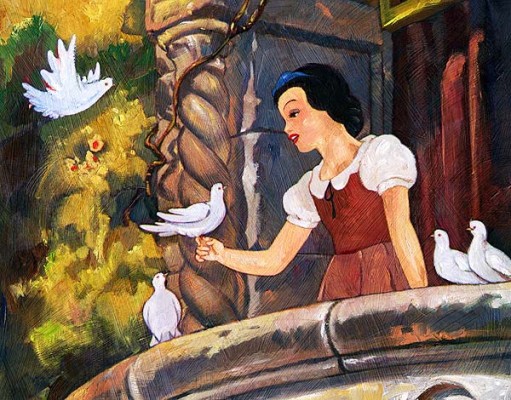
What intrigues me most about this project is that there have been significant additions to the main character. In this version, she apparently will be actively fighting to regain her kingdom and will wear armor.
Like a lot of other women, as a girl I went through my princess phrase. And one of the plots that I always found the most fascinating to read about concerned young women who were stripped of their rightful inheritance and often exiled or locked up. (It should also be noted that sometimes these things happened because they were women and their social status was inherently limited.) The young women struggled to take back what was their's. This occurred historically with princesses like Cleopatra, who spent two years in Rome or fictionally with characters like Rapunzel, who was locked up for reasons various authors have imagined. Unfortunately, these princess tales of going out and getting what you want are few and far between, usually focusing on a passive woman who has to be rescued by a man, and often featuring other, older, unmarried women who are evil.
I can't wait to see where these people take this movie. I'm hoping it will be feminist in the sense that it will empower young women to seek out reclaiming their own "kingdoms."
Friday, April 15, 2011
Dan Rickmers on the M. Night Film School Charity
I'm reading this piece by Dan Rickmers, discussing how a charity has been trying to collect donations to send M. Night Shamyamalan back to film school.
I'm sorry to hear Rickmers has not gotten into the graduate studies program in film, because he has a nice sense of humor, and I like the small moments of parody in this piece. Some of our best writers, both within traditional canonical texts (like Swift) and modern film writing (everyone over at The Daily Show and The Colbert Report) have been parody writers, and I'd like to see what Rickmers could do.
I'm sorry to hear Rickmers has not gotten into the graduate studies program in film, because he has a nice sense of humor, and I like the small moments of parody in this piece. Some of our best writers, both within traditional canonical texts (like Swift) and modern film writing (everyone over at The Daily Show and The Colbert Report) have been parody writers, and I'd like to see what Rickmers could do.
Saturday, March 12, 2011
Gothic Dress
If you've been reading this blog, you've realized by now I'm a totally history nerd. I love the everyday details of people's lives. Lately, it seems like I've been stumbling on blogs dedicating to historical clothing and people who make replica costumes. One of my recent favorites is this cute little number. There's something strangely Gothic about it. I could easily see one of the female characters from a Gothic romance wearing this, or maybe even Catherine from Northanger Abbey.
Wednesday, March 9, 2011
Best American Reading
Friday Tyrant recently took down the series of Best American Reading. This piece was funny and accurately covered the assumptions some people have about the series.
My complaint would be the assumption that readers of Friday Tyrant aren't already aware of the problematic nature of the Best American Reading series. Most literary people are well-read enough to know that there are a myriad of literary magazines out there, in part because almost all of them worked for one or another at some time. (Myself? The Red Cedar Review and The Offbeat.) They get that bigger magazines are not necessarily better, even though they may get a certain amount of media attention. And they know all about McSweeney's and its death grip on lit nerd's imagination.
I like that this article took down the entire institution, since I took a class where the teacher had us read selections from one of these anthologies to get a sense of where literary publishing was today. He was right to make us read it since it was an overview of the best known literary magazines out there, however, the magazine famously lacks lots of great literary magazines. I often felt that the poetry in my beloved Red Cedar Review frequently rivaled and sometimes out-did the poetry I have seen published in those anthologies. (Last year's "Lepidoptery" by Lia Greenwell was a phenomenal piece, but just about no one knows it.) Forklift, Ohio, one of the best literary magazines out there, is never featured in this series, and yet they regularly publish both Dean Young and Bob Hicok.
Best American Reading is an institution, and like all institutions, they're imperfect. That's the nature of institutions.
My complaint would be the assumption that readers of Friday Tyrant aren't already aware of the problematic nature of the Best American Reading series. Most literary people are well-read enough to know that there are a myriad of literary magazines out there, in part because almost all of them worked for one or another at some time. (Myself? The Red Cedar Review and The Offbeat.) They get that bigger magazines are not necessarily better, even though they may get a certain amount of media attention. And they know all about McSweeney's and its death grip on lit nerd's imagination.
I like that this article took down the entire institution, since I took a class where the teacher had us read selections from one of these anthologies to get a sense of where literary publishing was today. He was right to make us read it since it was an overview of the best known literary magazines out there, however, the magazine famously lacks lots of great literary magazines. I often felt that the poetry in my beloved Red Cedar Review frequently rivaled and sometimes out-did the poetry I have seen published in those anthologies. (Last year's "Lepidoptery" by Lia Greenwell was a phenomenal piece, but just about no one knows it.) Forklift, Ohio, one of the best literary magazines out there, is never featured in this series, and yet they regularly publish both Dean Young and Bob Hicok.
Best American Reading is an institution, and like all institutions, they're imperfect. That's the nature of institutions.
Tuesday, January 25, 2011
Cherrie Moraga, Race and Sexuality
 I've been reading Cherrie Moraga lately. She's a wonderful writer. I came across the following quote:
"People can't read your mind, they read your color, they read your womanhood, they read the woman you're with...I think that is why I have always hated the terms "biracial" and "bisexual." They are passive terms, without political bite...They are a declaration not of identity but of biology, of sexual practice."
Is it possible that those terms can be declarations of identity, especially now? (The book I read this in was published in the early nineties, which makes me wonder, in the fifteen years since that statement, are these claimable, political identities?)
I ask mostly because it seems like there has been a lot of activity happening in those two worlds. With the election of Obama to the presidency, there's been a lot of discussion of racial identity. Obama's mother was white and his father was African, but Obama claims to be African American and not biracial. There's been a lot of debate as to if he has the right to claim being African American or if he is being politically irresponsible in not choosing biracial.
And then there's the issue of bisexuality. I hear complaints all the time, from various people, about how bisexuals should just "choose," and then, if this wasn't problematic enough, that they are dangerous because they don't.
In both cases, I keep coming back to the idea of self-determination to define themselves however they want. No one chooses to be gay, but what if someone decided to define themselves as a bunny, as one of my friends did at around eighteen? It was a little unexpected, and some people struggled to wrap their heads around it, but it wasn't really a big deal. He just enthusiastically ate carrots and I occasionally petted him on the head. I realize there are bigger things at stake when discussing race and sexuality, but if identity is self-defined, it challenges the notion that society can define race and sexuality, which is, of course, what it has always been doing all along. Despite the evidence that there is no biological basis in race, people have been grouped that way. If someone decides they simply aren't anymore, maybe society at large will look at them the same way, but maybe they won't. And when lots of people begin defining themselves in unexpected ways, maybe more people will be forced to examine the idea that they have the right to impose identity on someone else in the first place.
Tuesday, August 3, 2010
What to Read When You're a Freshmen
Slate has posted an article on what books incoming freshmen should read. As someone who has recently ended her undergraduate career, I feel like I have a sense of what these incoming freshmen look like, as I spent the last three years watching the freshmen coming in, and then previous to that, was one of those members of a strange breed.
So here I present a little list of things I think incoming freshmen should read:
 Sandra Cisneros's Woman Hollering Creek. A lot of schools would probably be tempted to assign Cisneros's better known novel, The House on Mango Street. There's nothing wrong with this novel, in fact, it's perfect and the sort of book a poet would like. But Woman Hollering Creek, a collection of short stories, looks at a larger group of mostly women, each struggling for a life that is there own and no one else's. Perfect for college kids looking to cut those strings and hopefully, a chance to talk about race, gender and immigration.
Jane Vincent Taylor's What Can Be Saved. I've never heard of a college assigning a book of poetry. (It turns students off, because poetry is apparently hard.) But Taylor's poetry here is one continuous story narrated through two of the character, Mother and Lovey. Mother is really an older woman caring for Lovey, a young woman with an unnamed condition. It's easy to forget that there are people out there who aren't so privileged and aren't lucky enough to get a college education, and here these characters are lovingly rendered.
Aeschylus's Prometheus Bound. A play about knowledge and who does and doesn't deserve it. Perfect for a discussion of the same problem.
Thomas Middleton and Thomas Dekker's The Roaring Girl. Another play, one from the time of the Shakespeare that isn't actually from Shakespeare. Everyone reads that man, but forgets that there were other playwrights working at the same time, and some of them also had interesting thoughts on issues like gender, as with this play, which deals with a crossdresser based on a real woman.
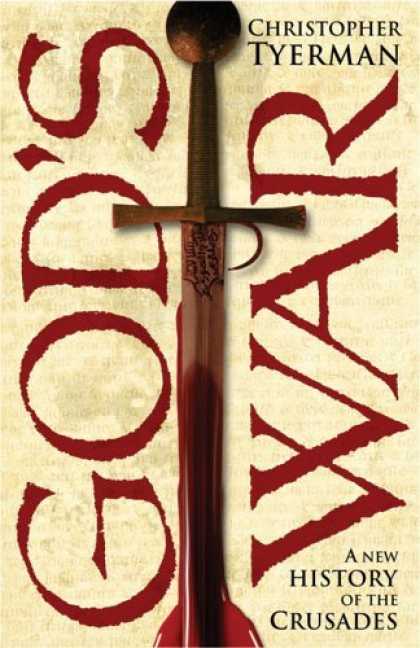
 Christopher Tyerman's God's War: A New History of the Crusades. The bad news: We're fighting a war in the Middle East, one that is sadly tied with religion. The good news: The West tried this before. Even worse news: The West lost the first time. The best news: We don't have to repeat their mistakes. Tyerman's book is an excellently written and exciting account of the Crusades (all of them. All.) and a great way to begin a discussion on the current War on Terror from a more historical and cultural perspective.
Toni Morrison's Sula. This novel is perfect for college kids because it's about a friendship between two girls, Sula and Nel. One goes to college, one doesn't, and when the one who did returns, their relationship falls apart, but they still love each other. A cautionary tale for all those who left someone behind.
Willy Russell's Educating Rita. Another great story about college, but, again, from someone less privileged. Rita, a woman in her late twenties, tries to educate herself through England's Open University Program, and ends up also educating her well-off tutor.
Michael Frayn's Copenhagen. Like a lot of the books on this list, this one is of a play, not a novel or nonfiction work. It explores the issues of truth, responsibility and science: all important issues that affect college students, no matter where they go or what they study.
So here I present a little list of things I think incoming freshmen should read:

Jane Vincent Taylor's What Can Be Saved. I've never heard of a college assigning a book of poetry. (It turns students off, because poetry is apparently hard.) But Taylor's poetry here is one continuous story narrated through two of the character, Mother and Lovey. Mother is really an older woman caring for Lovey, a young woman with an unnamed condition. It's easy to forget that there are people out there who aren't so privileged and aren't lucky enough to get a college education, and here these characters are lovingly rendered.
Aeschylus's Prometheus Bound. A play about knowledge and who does and doesn't deserve it. Perfect for a discussion of the same problem.
Thomas Middleton and Thomas Dekker's The Roaring Girl. Another play, one from the time of the Shakespeare that isn't actually from Shakespeare. Everyone reads that man, but forgets that there were other playwrights working at the same time, and some of them also had interesting thoughts on issues like gender, as with this play, which deals with a crossdresser based on a real woman.
Toni Morrison's Sula. This novel is perfect for college kids because it's about a friendship between two girls, Sula and Nel. One goes to college, one doesn't, and when the one who did returns, their relationship falls apart, but they still love each other. A cautionary tale for all those who left someone behind.
Willy Russell's Educating Rita. Another great story about college, but, again, from someone less privileged. Rita, a woman in her late twenties, tries to educate herself through England's Open University Program, and ends up also educating her well-off tutor.
Michael Frayn's Copenhagen. Like a lot of the books on this list, this one is of a play, not a novel or nonfiction work. It explores the issues of truth, responsibility and science: all important issues that affect college students, no matter where they go or what they study.
Tuesday, June 8, 2010
Good to Hear You
I’ve been indulging in a little bit of reading today. I really liked this “Good to Hear You.”
One of the things that I thought was really interesting about it was the speaker’s voice and the main character. The speaker is the child of the main character, and it’s odd to hear someone describing someone’s actions as “My Father did this” or “My Father did that.” This particular device really pays off at the end of the story.
I also like the idea of people staring through their corporate buildings at the main character, an artist, as he works on a painting and gets mistaken for a terrorist.
One of the things that I thought was really interesting about it was the speaker’s voice and the main character. The speaker is the child of the main character, and it’s odd to hear someone describing someone’s actions as “My Father did this” or “My Father did that.” This particular device really pays off at the end of the story.
I also like the idea of people staring through their corporate buildings at the main character, an artist, as he works on a painting and gets mistaken for a terrorist.
Friday, June 4, 2010
Women Read
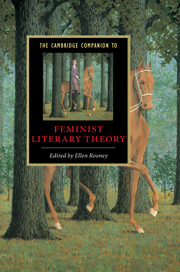 One of the projects I'm attempting to work on involves feminist theory. I'm reading parts of The Cambridge Companion to Feminist Theory, in order to educate myself about the issues. My hope is, after I finish this, I'll be able to move into reading selections of the theory itself, having the kind of background knowledge to make more sense of each individual work within a wider context. Even though I've taken classes on feminism and women in literature and read feminist blogs, I still feel like furthering my understanding of things is a worthy goal.
Working through the introduction, I stumbled upon an idea that I had never considered before, but it seems basic and obvious now. There was a short discussion about the effect of reading on women. One of the ideas surrounding reading is that it made women more likely to question the status quo. As someone who loves to read and thinks of herself as a questioner of the status quo, I obviously like this idea.
I was in that shaky area of brain space between wakefulness and sleep this morning, when I stumbled upon a refutation of that idea: Mr. Darcy Takes a Wife and Darcy and Elizabeth.

Some background: both of these books are part of a phenomenon within the Jane Austen fandom, where writers publish what are basically works of fanfiction, usually centering on the marital (bliss?) of Darcy and Elizabeth. I find these works interesting for several reasons, but I want to focus on one of the least discussed characters: Anne de Bourgh. Within these two works, Anne is shown reading books, and not just any books: Gothic romances, the kind of thing that feminists have long championed (like in the cult following around Jane Eyre). But in the novels, Anne is forced into a marriage by her mother, and her husband uses his marriage to her for his own financial gain. Anne dies in the second book after giving birth to a child, no one mourning in the least for her. She never escapes her abusive mother or negligent husband to live independently, as her own person.
This is problematic. At one glance, this could be interpreted as Berdoll, the author, criticizing Gothic romances for not really being as feminist as some say they are. I've often argued that point with Jane Eyre, complaining that for a so-called feminist novel, our heroine ends up with a guy who tricked, lied and manipulated her. But this could also be seen as a criticism of the idea that women who read are automatically going to be feminists.
There's a lot of proof, even in my personal life, of this. I have a few self-identified feminist friends who say things that are anything but feminist. ("Oh, well, that girl is exaggerating. She probably just wishes he was stalking her.") They have college educations, they read, and yet they're totally for the status quo. There are a ton of so-called feminists who love their white privilege and refuse to see that in furthering a "feminism" that is limited to white women, they are just furthering the same oppressive system. I've been frustrated on quite a few occasions by this.
So, does reading make a difference? It doesn't hurt. Women who read reap the normal benefits of reading: mental exercise, better sense of language, exposure to well-constructed arguments and varied points of view. Because of this, women are more likely to see the ways in which systems of oppression operate, and through that knowledge, work to bring them down.
I myself am proof that it makes a difference, since I began this project in an attempt to understand more about the world around me, and even though I wasn't even through the introduction of the book I'm reading, I've already found myself considering ideas inter-textually and constructing an argument about the validity of an argument. So sure, women read. Feminists question power and argue for greater inclusion.
Wednesday, April 7, 2010
Even More Upcoming Events
If the last two posts I had about upcoming events weren't enough, there are also two events going on Friday.
April 16 Master Poetry Class with Catherine Bowman 11 am-1 pm 110 Morrill Hall
Catherine Bowman is a poet and Ruth Lilly Professor at Indiana University. She has published several poetry books, including 1-800-HOT-RIBS and Rock Farm, and has won numerous awards, including the New York Foundation of the Arts Fellowship in Poetry. Her work has appeared in various anthologies and magazines, including Best American Poetry, River Styx, The Los Angeles Times, An Exhilaration of Forms, Ploughshares, Conjunctions and TriQuarterly. To RSVP, email Robin Silbergleid at silberg1@msu.edu. Please bring a sample of your creative writing to work on.
April 16 Catherine Bowman Poetry Reading 3 pm 213 Morrill Hall
Again, the same poet will be reading her work. I really love her poem "I Want to Be Your Shoebox." There's something really child-like about the poem, but it's exactly how I feel about certain boys in my life.
April 16 Master Poetry Class with Catherine Bowman 11 am-1 pm 110 Morrill Hall
Catherine Bowman is a poet and Ruth Lilly Professor at Indiana University. She has published several poetry books, including 1-800-HOT-RIBS and Rock Farm, and has won numerous awards, including the New York Foundation of the Arts Fellowship in Poetry. Her work has appeared in various anthologies and magazines, including Best American Poetry, River Styx, The Los Angeles Times, An Exhilaration of Forms, Ploughshares, Conjunctions and TriQuarterly. To RSVP, email Robin Silbergleid at silberg1@msu.edu. Please bring a sample of your creative writing to work on.
April 16 Catherine Bowman Poetry Reading 3 pm 213 Morrill Hall
Again, the same poet will be reading her work. I really love her poem "I Want to Be Your Shoebox." There's something really child-like about the poem, but it's exactly how I feel about certain boys in my life.
Thursday, March 18, 2010
A Manifesto
I live my life in widening circles
that reach out across the world.
I may not complete this last one
but I give myself to it.
I circle around God, around the primordial tower.
I've been circling for thousands of years
and I still don't know: am I a falcon,
a storm, or a great song?
Ranier Maria Rilke
A week ago, I went to a Festival of Listening, which was a poetry reading of poems all in foreign languages. Someone read the German version of this poem, which I’ve fallen in love with.
I’m particularly enamored of the first line. This is exactly how I want to live my life: in ever widening circles. I love learning and discovering new and different things, and I want my life to be full of that feeling you have when you’ve stumbled upon something important. I want to keep finding important things.
My goal with this blog is simple: force myself to have new experiences, either in the world or through art, and write about them. I want to challenge myself to keep thinking and striving to be something more.
I want to keep circling that primordial tower, but honestly, I’m not sure if I need an answer to that last question. I’d be happy to be one, or two, or three of those things. Or something else entirely.
that reach out across the world.
I may not complete this last one
but I give myself to it.
I circle around God, around the primordial tower.
I've been circling for thousands of years
and I still don't know: am I a falcon,
a storm, or a great song?
Ranier Maria Rilke
A week ago, I went to a Festival of Listening, which was a poetry reading of poems all in foreign languages. Someone read the German version of this poem, which I’ve fallen in love with.
I’m particularly enamored of the first line. This is exactly how I want to live my life: in ever widening circles. I love learning and discovering new and different things, and I want my life to be full of that feeling you have when you’ve stumbled upon something important. I want to keep finding important things.
My goal with this blog is simple: force myself to have new experiences, either in the world or through art, and write about them. I want to challenge myself to keep thinking and striving to be something more.
I want to keep circling that primordial tower, but honestly, I’m not sure if I need an answer to that last question. I’d be happy to be one, or two, or three of those things. Or something else entirely.
Subscribe to:
Posts (Atom)