One of the saddest aspects of studying history is how it is mostly told from a white point of view. Sources, throughout history, were far more likely to be written by white people, and they were more likely to survive. But far more depressing is how history is frequently taught from a white point of view.
There are historians, professional and amateur, whose work is changing this, and the Internet has become a great place for the forgotten, often-untaught histories to find new life. My newest favorite is Of Another Fashion, a blog covering the fashion choices (and the related life issues) of women of color. The tumblr has tons of pictures and personal testimonies as to the sartorial choices of women of color. A recent great post discussed the cultural history of the lunch counter.
Showing posts with label race. Show all posts
Showing posts with label race. Show all posts
Tuesday, July 26, 2011

Monday, February 21, 2011
Where Have All the Smart People Gone?
My friend Matt pointed me to the interesting article about education in the U.S. by state. The bad news is that my homestate, Michigan, is at the bottom in terms of educated people. I'm saddened by this news, but not surprised: friends, especially my most ambitious friends, have talked about how they have no choice but to leave the state to further pursue various goals. I myself have recently moved out and honestly don't want to move back, not because I don't love Michigan, but because I don't feel like there's anything there for me professionally.
This article is right to advocate for local solutions. The problem is that education is so varied by local communities. National politicians have frequently opted to use testing as a way to standardize education, but I suspect there's more at play here. Wealthy communities (and wealthier states) spend more on education, and the solution there is to find more effective ways at spending money on students, in a more egalitarian way. This difference in money spent on education was the motivating factor of one now-infamous mother's decision to "lie" to a school board about her children's residence so they could go to a "better" (and richer and whiter school.)
This article is right to advocate for local solutions. The problem is that education is so varied by local communities. National politicians have frequently opted to use testing as a way to standardize education, but I suspect there's more at play here. Wealthy communities (and wealthier states) spend more on education, and the solution there is to find more effective ways at spending money on students, in a more egalitarian way. This difference in money spent on education was the motivating factor of one now-infamous mother's decision to "lie" to a school board about her children's residence so they could go to a "better" (and richer and whiter school.)
Tuesday, January 25, 2011
Cherrie Moraga, Race and Sexuality
 I've been reading Cherrie Moraga lately. She's a wonderful writer. I came across the following quote:
"People can't read your mind, they read your color, they read your womanhood, they read the woman you're with...I think that is why I have always hated the terms "biracial" and "bisexual." They are passive terms, without political bite...They are a declaration not of identity but of biology, of sexual practice."
Is it possible that those terms can be declarations of identity, especially now? (The book I read this in was published in the early nineties, which makes me wonder, in the fifteen years since that statement, are these claimable, political identities?)
I ask mostly because it seems like there has been a lot of activity happening in those two worlds. With the election of Obama to the presidency, there's been a lot of discussion of racial identity. Obama's mother was white and his father was African, but Obama claims to be African American and not biracial. There's been a lot of debate as to if he has the right to claim being African American or if he is being politically irresponsible in not choosing biracial.
And then there's the issue of bisexuality. I hear complaints all the time, from various people, about how bisexuals should just "choose," and then, if this wasn't problematic enough, that they are dangerous because they don't.
In both cases, I keep coming back to the idea of self-determination to define themselves however they want. No one chooses to be gay, but what if someone decided to define themselves as a bunny, as one of my friends did at around eighteen? It was a little unexpected, and some people struggled to wrap their heads around it, but it wasn't really a big deal. He just enthusiastically ate carrots and I occasionally petted him on the head. I realize there are bigger things at stake when discussing race and sexuality, but if identity is self-defined, it challenges the notion that society can define race and sexuality, which is, of course, what it has always been doing all along. Despite the evidence that there is no biological basis in race, people have been grouped that way. If someone decides they simply aren't anymore, maybe society at large will look at them the same way, but maybe they won't. And when lots of people begin defining themselves in unexpected ways, maybe more people will be forced to examine the idea that they have the right to impose identity on someone else in the first place.
Friday, January 14, 2011
Elle's White Christmas

This is not to say that Ms. Rai Bachchan is the only one this has happened to. I notice that Beyonce always looks almost white, and while riding the subway yesterday evening I noted that the promo poster for the U.S. version of Skins has the actors and actresses, who come from a surprisingly large racial mix, look almost all white or at least light.
The other sad thing to consider is that the actors and actresses of color who do tend to "make it" are lighter. I so rarely see someone darker on tv or in the movies.
Saturday, January 8, 2011
Little Black Sambo Books
The University of Chicago has just received a donation of Little Black Sambo books. For those of you lucky enough not to have seen these stories, they revolved aroung a stereotypical-looking little black boy, written by a British woman and set in India.
Sambo still lives on. I have British friends, one only a few years older than myself, who remembers her Grandma sewing Sambo/golliwog dolls for both herself and her younger brother when they were children. When she told me that, I was mortified on her behalf that this would be acceptable. These images promote ideas about those of African descent having comical features and being toys to laugh at.
The problem with Sambo is obvious, and I'm thankful that this was one racially-charged image I was able to avoid as a child. But I'm glad this collection will be at a university, where researchers can study it and say "Yes, this is another example of how terribly racist society was, and how they were teaching it to children."
Sunday, January 2, 2011
Bend it Like Beckham
 According to EW, North Korea recently broadcast an edited version of Bend It Like Beckham on the state-controlled tv channel. It's apparently the first time North Koreans have seen a Western film.
As a feminist, I really like this movie because it's about women pursuing their dreams in a male-dominated field. I'm hoping this part of the movie got through the censors and that young women saw this part, because I know when I saw this movie came out, it made a big impression on me.
That said, I'm really curious to hear what did get censored out, because it's hard to imagine what North Korea would have found objectionable with this particular film. The only thing I can think is that they dislike the conversation the main character has about how she is limited in who she can date based on race and religion.
This news story also puts a lot into perspective. North Koreans have so little contact with the outside world that this is the first time they've seen Western films and it becomes a news story. North Korea is famously called the Hermit Kingdom, and if you read more about the country, you'll be horrified by the level of control and despair there.
Monday, December 27, 2010
Race Monopoly
Talking about race is tough, and showing people sometimes how race operates in a large system and how multiple "small" inequalities add up, but this short piece applying race to Monopoly does a good job of showing readers how race works. I would really love to see someone take this further and actually see some players try these rules out and even apply more rules (maybe even on other factors, like class as the writer suggests, but even something like gender or sexuality) to show how a larger economic system oppresses people.
Tuesday, October 5, 2010
The Social Network
I came upon this great little review of The Social Network. Although I haven't seen the movie yet, I've been reluctant to do so, since the trailer showed very few women and, as usual, in the service of men. Yawn. If I wanted to see stuff like that, I could just watch almost every mainstream movie, thanks.
At the end of the review, the author, Rebecca Davis O'Brien mentions that The Social Network probably only defines half of the generation. As someone who is loathe to admit that she's part of this generation, I find myself wondering the same thing: when is someone going to tell the story of my generation and my gender, since apparently we can't expect most stories to do both?
And then I find myself pondering other questions, most important this one: what is that story? Perhaps it is good for me to be thinking that women have such a wide variety of experiences that there is no good way to tell a story that is inclusive of all women in this age group. And maybe that's why I have a problem with The Social Network being hailed as the story of our generation in the first place: our experiences are too varied to be defined so narrowly, even if we pretend as if gender isn't a factor. (Or all the other things that are factors: race, sexuality, religion, etc.) Or this is just another round-about way of me saying that I am sick of movies that focus on privileged men and then hearing about how they somehow represent everyone, even though the world is made up of much more than just these men.
Tuesday, August 3, 2010
What to Read When You're a Freshmen
Slate has posted an article on what books incoming freshmen should read. As someone who has recently ended her undergraduate career, I feel like I have a sense of what these incoming freshmen look like, as I spent the last three years watching the freshmen coming in, and then previous to that, was one of those members of a strange breed.
So here I present a little list of things I think incoming freshmen should read:
 Sandra Cisneros's Woman Hollering Creek. A lot of schools would probably be tempted to assign Cisneros's better known novel, The House on Mango Street. There's nothing wrong with this novel, in fact, it's perfect and the sort of book a poet would like. But Woman Hollering Creek, a collection of short stories, looks at a larger group of mostly women, each struggling for a life that is there own and no one else's. Perfect for college kids looking to cut those strings and hopefully, a chance to talk about race, gender and immigration.
Jane Vincent Taylor's What Can Be Saved. I've never heard of a college assigning a book of poetry. (It turns students off, because poetry is apparently hard.) But Taylor's poetry here is one continuous story narrated through two of the character, Mother and Lovey. Mother is really an older woman caring for Lovey, a young woman with an unnamed condition. It's easy to forget that there are people out there who aren't so privileged and aren't lucky enough to get a college education, and here these characters are lovingly rendered.
Aeschylus's Prometheus Bound. A play about knowledge and who does and doesn't deserve it. Perfect for a discussion of the same problem.
Thomas Middleton and Thomas Dekker's The Roaring Girl. Another play, one from the time of the Shakespeare that isn't actually from Shakespeare. Everyone reads that man, but forgets that there were other playwrights working at the same time, and some of them also had interesting thoughts on issues like gender, as with this play, which deals with a crossdresser based on a real woman.
 Christopher Tyerman's God's War: A New History of the Crusades. The bad news: We're fighting a war in the Middle East, one that is sadly tied with religion. The good news: The West tried this before. Even worse news: The West lost the first time. The best news: We don't have to repeat their mistakes. Tyerman's book is an excellently written and exciting account of the Crusades (all of them. All.) and a great way to begin a discussion on the current War on Terror from a more historical and cultural perspective.
Toni Morrison's Sula. This novel is perfect for college kids because it's about a friendship between two girls, Sula and Nel. One goes to college, one doesn't, and when the one who did returns, their relationship falls apart, but they still love each other. A cautionary tale for all those who left someone behind.
Willy Russell's Educating Rita. Another great story about college, but, again, from someone less privileged. Rita, a woman in her late twenties, tries to educate herself through England's Open University Program, and ends up also educating her well-off tutor.
Michael Frayn's Copenhagen. Like a lot of the books on this list, this one is of a play, not a novel or nonfiction work. It explores the issues of truth, responsibility and science: all important issues that affect college students, no matter where they go or what they study.
So here I present a little list of things I think incoming freshmen should read:

Jane Vincent Taylor's What Can Be Saved. I've never heard of a college assigning a book of poetry. (It turns students off, because poetry is apparently hard.) But Taylor's poetry here is one continuous story narrated through two of the character, Mother and Lovey. Mother is really an older woman caring for Lovey, a young woman with an unnamed condition. It's easy to forget that there are people out there who aren't so privileged and aren't lucky enough to get a college education, and here these characters are lovingly rendered.
Aeschylus's Prometheus Bound. A play about knowledge and who does and doesn't deserve it. Perfect for a discussion of the same problem.
Thomas Middleton and Thomas Dekker's The Roaring Girl. Another play, one from the time of the Shakespeare that isn't actually from Shakespeare. Everyone reads that man, but forgets that there were other playwrights working at the same time, and some of them also had interesting thoughts on issues like gender, as with this play, which deals with a crossdresser based on a real woman.

Toni Morrison's Sula. This novel is perfect for college kids because it's about a friendship between two girls, Sula and Nel. One goes to college, one doesn't, and when the one who did returns, their relationship falls apart, but they still love each other. A cautionary tale for all those who left someone behind.
Willy Russell's Educating Rita. Another great story about college, but, again, from someone less privileged. Rita, a woman in her late twenties, tries to educate herself through England's Open University Program, and ends up also educating her well-off tutor.
Michael Frayn's Copenhagen. Like a lot of the books on this list, this one is of a play, not a novel or nonfiction work. It explores the issues of truth, responsibility and science: all important issues that affect college students, no matter where they go or what they study.
Saturday, June 19, 2010
A Great Way to Fly
Another day, another Geraldine Heng article. This time it's "'A Great Way to Fly': Women, Nationalism, and the Varieties of Feminism in Southeast Asia.".
The article chronicles the ways in which nationalist movements and feminism interacted with one another in several Southeast Asian countries. The short and short of it is this: feminism was initially used by progressive groups, who later abandoned it once they were able to achieve power. It then discusses examples of the airline industry exploiting the images of Asian women being as stereotypically willing to serve and please men.
In Singapore, for example, legislators passed the Woman's Charter, which defined women in their relationship to their husbands and children, which is not the way women should be defined, since not all women want to marry or even want to marry men or want children. It wasn't a complete fail, since it did enfranchise them in some ways, but after the charter was passed, people no longer believed that women still had issues; they believed the problem had been "fixed." (This is also a problem around people in the U.S.)
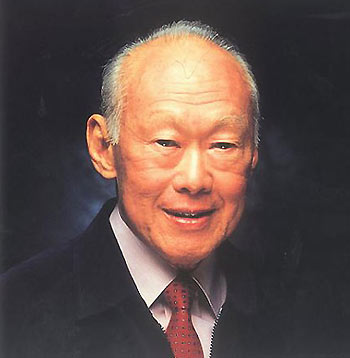
 There was also a brief mention of how feminism interacts with things like race and class. In 1983, the Singapore Prime Minister Lee Kuan Yew believed that educated women would mean that women would refuse to have children, and that in not doing so, there would not be enough children to maintain class and racial elites. This is a great example of how anti-feminist rhetoric is part of a larger status quo-maintaining power system that also oppresses through race and class. Yew wants to oppress women so that it's easier to oppress those who are not of high class and undesirable race. Oppression works on a wide variety of factors, and that disrupting one works to disrupt the others.
The article mentions a lot of women leaders who I am unfamiliar with. Being the research junkie that I am, I tried to look some of them up. Many of these women don't have Wikipedia articles (even tiny ones). Sometimes if you search for them you can find small bits and pieces on the web, but it's very frustrating.
For example: Aishah Ghani was the first president of AWAS, a political party in Malaysia, and later on the president of UMNO's second women's wing, according to the article. I was able to find that she has a memoir, which went onto that long list of books I want to read. There are non-English Wikipedia pages and webpages on her that I was able to translate, which are helpful and illuminating, but I wish this kind of information was available in English, because it's certain Americans who need access to information like this on other countries, because we're so famously ignorant on events outside the United States. Also, it strikes me as an oversight of Wikipedia.
 It was even harder to find information on Sakinah Junid. I couldn't find any Wikipedia articles on her, not even the non-English kind. Junid was the president of the Parti Islam's women section. I found a book that mentioned her and what may be her own blog.
I was happy that someone has some info listed on Shamsiah Fakeh: she was the second president of AWAS, she was exiled from Malaysia, she has a memoir published in Chinese, she died in 2008.
I also love that Heng uses the word "fantasmatic," which is one of those great words that people don't use enough. She also uses the words "exegetes," which is someone who interprets a text, and "techne," which is a Greek word meaning someone who produces art with a particular goal in mind. Great words like that often make me want to write poetry.
The article chronicles the ways in which nationalist movements and feminism interacted with one another in several Southeast Asian countries. The short and short of it is this: feminism was initially used by progressive groups, who later abandoned it once they were able to achieve power. It then discusses examples of the airline industry exploiting the images of Asian women being as stereotypically willing to serve and please men.
In Singapore, for example, legislators passed the Woman's Charter, which defined women in their relationship to their husbands and children, which is not the way women should be defined, since not all women want to marry or even want to marry men or want children. It wasn't a complete fail, since it did enfranchise them in some ways, but after the charter was passed, people no longer believed that women still had issues; they believed the problem had been "fixed." (This is also a problem around people in the U.S.)
The article mentions a lot of women leaders who I am unfamiliar with. Being the research junkie that I am, I tried to look some of them up. Many of these women don't have Wikipedia articles (even tiny ones). Sometimes if you search for them you can find small bits and pieces on the web, but it's very frustrating.
For example: Aishah Ghani was the first president of AWAS, a political party in Malaysia, and later on the president of UMNO's second women's wing, according to the article. I was able to find that she has a memoir, which went onto that long list of books I want to read. There are non-English Wikipedia pages and webpages on her that I was able to translate, which are helpful and illuminating, but I wish this kind of information was available in English, because it's certain Americans who need access to information like this on other countries, because we're so famously ignorant on events outside the United States. Also, it strikes me as an oversight of Wikipedia.
 It was even harder to find information on Sakinah Junid. I couldn't find any Wikipedia articles on her, not even the non-English kind. Junid was the president of the Parti Islam's women section. I found a book that mentioned her and what may be her own blog.
I was happy that someone has some info listed on Shamsiah Fakeh: she was the second president of AWAS, she was exiled from Malaysia, she has a memoir published in Chinese, she died in 2008.
I also love that Heng uses the word "fantasmatic," which is one of those great words that people don't use enough. She also uses the words "exegetes," which is someone who interprets a text, and "techne," which is a Greek word meaning someone who produces art with a particular goal in mind. Great words like that often make me want to write poetry.
Monday, April 12, 2010
A Black Queen of England
Doctor Who does not have such a great track record when it comes to race. A while back, when David Tennant announced he was leaving the show, there were all sorts of ideas about who the next doctor should be. Some of these ideas included black and/or female actors taking over the show. Who got it? Another white man.
The show occasionally has dealt with race, as it did briefly when it had on as companion Martha Jones, played by the lovely Freema Agyeman, who is of Ghanaian and Iranian descent. Agyeman was a wonderful breath of fresh air and did a wonderful job making Martha a smart and captivating character. The show acknowledged her race, and showed characters, even supposed good ones, treating her badly because of it. I personally thought this was a great opportunity for a interracial romance to develop between her and the Doctor, who, despite saying that ethnicity was irrelevant to him, was still played by a white actor. When they instead married her off to Mickey, the one and only major Black British male character who was first romantically involved with a white woman, I was disappointed. The show did not develop a romance, between Martha and Mickey, it simply put them together as an afterthought. I wondered if people were uncomfortable with the idea of a Black British woman involved with a white-looking alien. Or with just a Black British woman.
Which is why I was surprised by the character Liz 10 on this past weekend's episode of Doctor Who. Liz 10 was played by Sophie Okonedo, who is most famous for starring in Hotel Rwanda. Liz 10 is the 10th Queen Elizabeth, and she's clearly black. Of course, she's also being lied to and manipulated by her own government (who are mostly white, natch) and by herself. I am glad that they decided to show a Queen of England of the future as black, instead of white, like every King or Queen of the past. Liz 10 is badass, the kind of character I would love to see as a bigger character on the show, but who I suspect we won't see, because, well, if the past years of this show is any indication, even if she did become a companion, she would eventually be written out of the show and married off to another Black character. Because only Black women can marry Black men; they can't have a romance with some white alien, because he's too busy pining for a white woman who is literally another universe away.
Subscribe to:
Posts (Atom)