Slate has this wonderful ongoing series on report cards from the Manhattan Trade School for Girls. A journalist found a collection of postcards in 1996, and thirteen years later begins researching the women behind these records.
These stories are extraordinary. Many of them were poor and some had disabilities, yet many managed to provide for themselves and their families. They struggled with strange employers and low wages. Some of them got married and had children. Education for women was not always readily available, and so anything that allowed women to work as their own bosses made an impact on their lives. These are the sort of women who are often forgotten by history and their lives are harder to document because there are less primary sources, but this series of articles remind readers of their existence and realities, ones difficult and courageous.
In addition to this, seeing these report cards reminds readers how these were truly everyday people. Recently, I got to see my Grandmother's transcript and yearbook picture from when she was in college. It was striking to see her grades and classes, which were closer to mine than I realized. She had never mentioned how much music she had taken, or that her minor was in English (which was my major). Even her haircut managed to be both in style for the time and terrible embarrassing. I can imagine both the delight and surprise these report cards gave families, reminding them that even Mom or Grandma once had a class she just could not stand.
Showing posts with label Slate. Show all posts
Showing posts with label Slate. Show all posts
Monday, September 19, 2011

Thursday, June 23, 2011
Looking Presidential
Slate recently posted this short article comparing Republican candidates to B-list actors who play Presidents in movies.
This is sort of a nice switch from the usual way politics and appearance plays out. Female politicians are always being dissected for their physical appearance. Their hair, their clothes (skirts or power suits?), how old they look, and other markers that don't usually represent their skills or experience or even how good they might be at a particular job. So, finally, someone is letting female politicians take a break on the whole "but is she matronly enough?" debate and looking at men.
That said, there are much better ways to judge someone's fitness.
This is sort of a nice switch from the usual way politics and appearance plays out. Female politicians are always being dissected for their physical appearance. Their hair, their clothes (skirts or power suits?), how old they look, and other markers that don't usually represent their skills or experience or even how good they might be at a particular job. So, finally, someone is letting female politicians take a break on the whole "but is she matronly enough?" debate and looking at men.
That said, there are much better ways to judge someone's fitness.
Tuesday, June 7, 2011
The History of Lady Gagas

Friday, October 1, 2010
Breaking Down Gender
Slate is running another great series of articles, this one exploring male-female relationships. In a recent article, the author mentions that a lot of our culture's unease about platonic male-female friendships is probably related to gender roles.
I like having guy friends. The article mentions women like not having to talk about their feelings all the time with their guy friends. I take umbrage with this statement. There are guy friends that I never talk to about my feelings, but I don't want to conclude that's because of their gender. It could easily be their personality, because I have lots of other guy friends who I can have long, private conversations with too. And because there are girl friends that I have very little of those discussions and others that I have a lot with.
Gender seems to me to be a poor way of choosing friends or even relating to them, especially since there are so many personalities and experiences to learn from and understand. I like this series because it explores how strange society reacts to these relationships, but sometimes the assumptions about gender bothers me. Gender is far more flexible and fluid.
I like having guy friends. The article mentions women like not having to talk about their feelings all the time with their guy friends. I take umbrage with this statement. There are guy friends that I never talk to about my feelings, but I don't want to conclude that's because of their gender. It could easily be their personality, because I have lots of other guy friends who I can have long, private conversations with too. And because there are girl friends that I have very little of those discussions and others that I have a lot with.
Gender seems to me to be a poor way of choosing friends or even relating to them, especially since there are so many personalities and experiences to learn from and understand. I like this series because it explores how strange society reacts to these relationships, but sometimes the assumptions about gender bothers me. Gender is far more flexible and fluid.
Tuesday, August 3, 2010
What to Read When You're a Freshmen
Slate has posted an article on what books incoming freshmen should read. As someone who has recently ended her undergraduate career, I feel like I have a sense of what these incoming freshmen look like, as I spent the last three years watching the freshmen coming in, and then previous to that, was one of those members of a strange breed.
So here I present a little list of things I think incoming freshmen should read:
 Sandra Cisneros's Woman Hollering Creek. A lot of schools would probably be tempted to assign Cisneros's better known novel, The House on Mango Street. There's nothing wrong with this novel, in fact, it's perfect and the sort of book a poet would like. But Woman Hollering Creek, a collection of short stories, looks at a larger group of mostly women, each struggling for a life that is there own and no one else's. Perfect for college kids looking to cut those strings and hopefully, a chance to talk about race, gender and immigration.
Jane Vincent Taylor's What Can Be Saved. I've never heard of a college assigning a book of poetry. (It turns students off, because poetry is apparently hard.) But Taylor's poetry here is one continuous story narrated through two of the character, Mother and Lovey. Mother is really an older woman caring for Lovey, a young woman with an unnamed condition. It's easy to forget that there are people out there who aren't so privileged and aren't lucky enough to get a college education, and here these characters are lovingly rendered.
Aeschylus's Prometheus Bound. A play about knowledge and who does and doesn't deserve it. Perfect for a discussion of the same problem.
Thomas Middleton and Thomas Dekker's The Roaring Girl. Another play, one from the time of the Shakespeare that isn't actually from Shakespeare. Everyone reads that man, but forgets that there were other playwrights working at the same time, and some of them also had interesting thoughts on issues like gender, as with this play, which deals with a crossdresser based on a real woman.
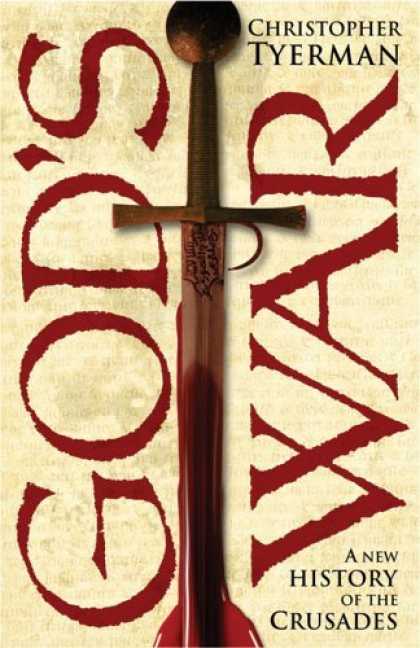
 Christopher Tyerman's God's War: A New History of the Crusades. The bad news: We're fighting a war in the Middle East, one that is sadly tied with religion. The good news: The West tried this before. Even worse news: The West lost the first time. The best news: We don't have to repeat their mistakes. Tyerman's book is an excellently written and exciting account of the Crusades (all of them. All.) and a great way to begin a discussion on the current War on Terror from a more historical and cultural perspective.
Toni Morrison's Sula. This novel is perfect for college kids because it's about a friendship between two girls, Sula and Nel. One goes to college, one doesn't, and when the one who did returns, their relationship falls apart, but they still love each other. A cautionary tale for all those who left someone behind.
Willy Russell's Educating Rita. Another great story about college, but, again, from someone less privileged. Rita, a woman in her late twenties, tries to educate herself through England's Open University Program, and ends up also educating her well-off tutor.
Michael Frayn's Copenhagen. Like a lot of the books on this list, this one is of a play, not a novel or nonfiction work. It explores the issues of truth, responsibility and science: all important issues that affect college students, no matter where they go or what they study.
So here I present a little list of things I think incoming freshmen should read:

Jane Vincent Taylor's What Can Be Saved. I've never heard of a college assigning a book of poetry. (It turns students off, because poetry is apparently hard.) But Taylor's poetry here is one continuous story narrated through two of the character, Mother and Lovey. Mother is really an older woman caring for Lovey, a young woman with an unnamed condition. It's easy to forget that there are people out there who aren't so privileged and aren't lucky enough to get a college education, and here these characters are lovingly rendered.
Aeschylus's Prometheus Bound. A play about knowledge and who does and doesn't deserve it. Perfect for a discussion of the same problem.
Thomas Middleton and Thomas Dekker's The Roaring Girl. Another play, one from the time of the Shakespeare that isn't actually from Shakespeare. Everyone reads that man, but forgets that there were other playwrights working at the same time, and some of them also had interesting thoughts on issues like gender, as with this play, which deals with a crossdresser based on a real woman.
Toni Morrison's Sula. This novel is perfect for college kids because it's about a friendship between two girls, Sula and Nel. One goes to college, one doesn't, and when the one who did returns, their relationship falls apart, but they still love each other. A cautionary tale for all those who left someone behind.
Willy Russell's Educating Rita. Another great story about college, but, again, from someone less privileged. Rita, a woman in her late twenties, tries to educate herself through England's Open University Program, and ends up also educating her well-off tutor.
Michael Frayn's Copenhagen. Like a lot of the books on this list, this one is of a play, not a novel or nonfiction work. It explores the issues of truth, responsibility and science: all important issues that affect college students, no matter where they go or what they study.
Friday, June 25, 2010
Poetry of the Rich and Powerful
 Recently, Slate published an article about how President Lincoln wrote decent poetry. The article features an interesting poem, one that is keeping with the kind of poetry produced in Lincoln's time. One of the things that article didn't mention was that other leaders have been known to write poetry, including Queen Elizabeth I, who wrote poems in rhyming couplets, and Chairman Mao, who wrote nature poems in the style of Walt Whitman.
Given that leadership and decent poetry apparently went hand in hand, I wondered: what would the poetry of other leaders look like?
For example, if Attila the Hun wrote a haiku, I'd expect it to go like this:
Aetius, you can
regard this your final war
-ning: Rome will be mine.
regard this your final war
-ning: Rome will be mine.
Not that Attila would ever write a haiku, considering that Attila was a Hun and that proto-haiku began developing some 1,200 years later. But it's still fun to imagine, especially when we imagine cruel leaders capable of writing heartfelt poems.
What if a nameless Viking were to write a tanka?
What if a nameless Viking were to write a tanka?
Shepard! Where is the
monastery of Lindis-
farne? My brothers and
I took the wrong way at the
fork on the river Garonne.
monastery of Lindis-
farne? My brothers and
I took the wrong way at the
fork on the river Garonne.
I think this has the potential to be a very fun, and silly, creative writing exercise. I'm putting together a guide for some people at the Center for Poetry on creative writing activities, and even though I wasn't planning on it, I think I'm going to put this in there.
Subscribe to:
Posts (Atom)