So I recently was reading this article on the beginnings of a new online magazine called Rookie, and they addressed a question that I've been wondering about for years now: are fashion and feminism inherently at odds with each other?
I ask this because there are so many magazines, online and in print, written towards young women that says yes. Jezebel, xojane, and (back in the day) Sassy feature both articles on fashion trends and feminism. At times, I really like this, since I would like to hope a young woman might get lured in by the fashion and come away with a little bit of feminist theory. Even if she is just more empowered in a practical way to be more assertive with men or to be proud of her body, then that is better than the alternative. But still, the models are so skinny. And the clothes they wear are often so expensive and so frequently come from suspect places with shady employers with no labor rights.
And yet, we all define ourselves through clothes, even in not caring about fashion. It is a choice, and like all choices, a political one. And like all choices, potentially influenced by outside sources, some liberating and some not. It would be stupid or naive to just assume that fashion is automatically bad. Fashion, like so many other aspects of life, has been co-opted by capitalist/misogynist/racist/homophobic/ableist and other oppressive forces, but that is all the more reason to find ways to combat it. The author of the above article rightly draws the comparison between straight women and queers using fashion as a way to define oneself which is just like so many other things within feminism: queers found a way to make it work first. For myself, I wish that women's magazines that were about both fashion and feminism would spend less energy trying to hammer the point home that fashion is not automatically anti-woman/anti-feminist but instead explore it as a complicated, multi-faceted issue (much like feminism is, natch), one that could be either oppressive or liberating, especially depending on context. I want to be informed about what I wear, even if that means that fashion does not get the best light it always wants to be in.
Showing posts with label article. Show all posts
Showing posts with label article. Show all posts
Thursday, September 15, 2011

Thursday, June 23, 2011
Looking Presidential
Slate recently posted this short article comparing Republican candidates to B-list actors who play Presidents in movies.
This is sort of a nice switch from the usual way politics and appearance plays out. Female politicians are always being dissected for their physical appearance. Their hair, their clothes (skirts or power suits?), how old they look, and other markers that don't usually represent their skills or experience or even how good they might be at a particular job. So, finally, someone is letting female politicians take a break on the whole "but is she matronly enough?" debate and looking at men.
That said, there are much better ways to judge someone's fitness.
This is sort of a nice switch from the usual way politics and appearance plays out. Female politicians are always being dissected for their physical appearance. Their hair, their clothes (skirts or power suits?), how old they look, and other markers that don't usually represent their skills or experience or even how good they might be at a particular job. So, finally, someone is letting female politicians take a break on the whole "but is she matronly enough?" debate and looking at men.
That said, there are much better ways to judge someone's fitness.
Sunday, June 19, 2011
Lesbians in Shakespeare
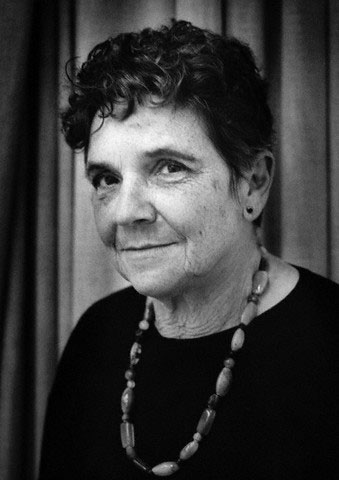
Using the colloquial definition of a lesbian, and not the one put forth by Adrienne Rich, the only characters who might actually be lesbians are Viola and Olivia. And even there it's hard to determine how much of Olivia's affections was based on Viola or her made-up persona, one that was meant to be a man. And then, of course, the question becomes one what that says about lesbian desires. It would be easy to conclude that Olivia likes the male persona but wouldn't want the female body that comes along with it, which could be interpreted to mean that lesbians secretly desire masculinity, which is problematic.
Hermione from A Winter's Tale, Cleopatra from Antony and Cleopatra, and Beatrice from Much Ado About Nothing could be involved with their female servants or friends, but the evidence that they were is circumstantial at best. I would be more convinced if there was some evidence that Shakespeare was inspired by historical events that involved women loving women or stories of women loving women, since so much of what Shakespeare wrote was based on other sources.

The Renaissance play that actually has one of the most interesting depictions of a woman who hangs out with other women is The Roaring Girl. This play, too, has a problematic set of ideas about gender and women's place in the world.
Sunday, February 27, 2011
They Don't Make Them Like They Use To
The BBC recently published this great article about the microphones used back in the day. Apparently, despite the age, they still basically work.
That's pretty extraordinary. So much of our electronics and other technical gear is made for one-use or only brief use. And that's too bad, because then we're more inclined to throw things out when they're constantly breaking down. We need to get back to making things that last and reusing the old things that still work. Our planet needs it.
That's pretty extraordinary. So much of our electronics and other technical gear is made for one-use or only brief use. And that's too bad, because then we're more inclined to throw things out when they're constantly breaking down. We need to get back to making things that last and reusing the old things that still work. Our planet needs it.
Saturday, January 15, 2011
Women and Beauty
OkCupid, the dating site, has an interesting recent article on the mathematics of women's beauty. Really, this is more about statistics and there's no Golden Ratio mentioned.
There are some good things about this article. The conclusion at the end, encouraging women to play up their flaws, is nice because usually when you read a woman's magazine, the first thing they will tell you is basically make yourself perfect. Be perfect all the time. Are you perfect yet? No? Then you are going to spend the rest of your life aloooooone. Foreeeeevvver.
(And while we're at it, an aside: telling women to never show a negative emotion is possibly the oldest dating advice of all time. I'm personally really sick of it. If a guy can't deal with me now, he's not going to be able to handle later.)
There are a lot of problems with this post. For one thing, it is based solely on heterosexual ideas of love. (Men are apparently only interested in women and vice versa in the universe this article plays into.) I am unfamiliar with OkCupid, so it is possible this is one of those dating sites that only allows for heterosexual pairings, or at least only encourages them, but I found this assumption really sad and dated. Maybe they are planning on eventually analyzing women interested in women and men interested in men, but if they are, they give no mention of it.
I would also like to know how they rated attractiveness. Was it just based on the authors opinions? Did they actually poll people? (It looks like they might of, but it's a little unclear. Again, because I'm not familiar with OkCupid, I don't know.)
There are some good things about this article. The conclusion at the end, encouraging women to play up their flaws, is nice because usually when you read a woman's magazine, the first thing they will tell you is basically make yourself perfect. Be perfect all the time. Are you perfect yet? No? Then you are going to spend the rest of your life aloooooone. Foreeeeevvver.
(And while we're at it, an aside: telling women to never show a negative emotion is possibly the oldest dating advice of all time. I'm personally really sick of it. If a guy can't deal with me now, he's not going to be able to handle later.)
There are a lot of problems with this post. For one thing, it is based solely on heterosexual ideas of love. (Men are apparently only interested in women and vice versa in the universe this article plays into.) I am unfamiliar with OkCupid, so it is possible this is one of those dating sites that only allows for heterosexual pairings, or at least only encourages them, but I found this assumption really sad and dated. Maybe they are planning on eventually analyzing women interested in women and men interested in men, but if they are, they give no mention of it.
I would also like to know how they rated attractiveness. Was it just based on the authors opinions? Did they actually poll people? (It looks like they might of, but it's a little unclear. Again, because I'm not familiar with OkCupid, I don't know.)
Thursday, December 30, 2010
Huxley and Orwell
The only problem I have with this article is the assumption that "new world order" is all that new. When I look back into history, I think about the control that states had on their subjects, especially marginalized subjects (women, slaves, etc.). Although I agree that recent leaps in technology have allowed for more effective control, I cannot think of a clear moment in history where individuals were truly as free as this article implies.
Thursday, December 16, 2010
Fibromyalagia and Gender
Today I was reading an article on fibromyalagia, which women disproportionately suffer from. Basically, it states that gender politics plays a big role, and I can think of a lot of other modern examples of women's health being ignored.
Less research is done on women's illnesses than men's. Viagra, a men's product, is insured, but some medicines for women (or even sometimes predominately used by women)are uninsured. Fibromylagia is just another, more modern example of "hysteria" which was a woman's disease caused by not being obedient enough. Women's crazy moods? Caused by the way her womb was sitting in her body. Sadly, people still basically think this when they discount a woman because it's "that time of the month."
It's enough to make you sick.
Less research is done on women's illnesses than men's. Viagra, a men's product, is insured, but some medicines for women (or even sometimes predominately used by women)are uninsured. Fibromylagia is just another, more modern example of "hysteria" which was a woman's disease caused by not being obedient enough. Women's crazy moods? Caused by the way her womb was sitting in her body. Sadly, people still basically think this when they discount a woman because it's "that time of the month."
It's enough to make you sick.
Tuesday, December 14, 2010
Video Games, Women and Minorities
This is an article by the Guardian about video games and the representation of women and minorities. Unsurprisingly, a new study found that women and people of color are underrepresented in games and that they are generally not characters you can control. So depressing, but also something that anyone even vaguely aware of video games already knows. This is the number one reason I do not play video games much, despite admiring other things about them.
Thursday, November 18, 2010
McLuhan's Religion and the Influence of Media
 Carrying on from yesterday's post, Wired magazine has an article discussing McLuhan and a recent documentary on him. The article mentions that McLuhan converted to Catholicism but that why isn't made clear. But if you read the Wikipedia article, you know it's because of G.K. Chesterton, the English writer.
Most of us don't consider how media effects us, but obviously McLuhan was hyper-aware of it. Moreover, we are even less likely to think about how books affect us, especially if we're not the kind of people to see books as media because of how old they are. McLuhan, even at a young age, saw the effect that Chesterton had on him, because it changed him into a religious man. Given McLuhan's own account of what made him convert, it seems obvious he would one day turn around and see other forms of media as having large influence on people, even if they were converting to a very different form of religion.
Wednesday, November 17, 2010
The Medium is the Message
Wikipedia has fascinating articles on ideas and people. One entry I was recently reading was on Marshall McLuhan. McLuhan is probably most famous for the statement that "the medium is the message," which basically states that the context of an idea is important. McLuhan wrote some of the most influential books on media and the way people consume it.
McLuhan passed away before the Internet, which is too bad, because he would have a lot to say about an age made of Skype, texting, and, well, Wikipedia. He probably would see our media as harmful to society and as a way for power structures to maintain the status quo.
McLuhan passed away before the Internet, which is too bad, because he would have a lot to say about an age made of Skype, texting, and, well, Wikipedia. He probably would see our media as harmful to society and as a way for power structures to maintain the status quo.
Wednesday, October 6, 2010
Shirley Chisholm
 There's this nice article mentioning that a building has been named in honor of Shirley Chisholm, the first African American woman to run as a major party candidate. She was a pretty incredible woman, so this is a nice honor, considering the building's history, given at the end of the article.
What always surprises (and saddens me) is how frequently people don't know who Chisholm is. I don't think Chisholm is the only often-forgotten important leader, but it's sad so many of the these often-forgotten are People of Color or LBGT or in some way not part of the mainstream power system.
Friday, October 1, 2010
Breaking Down Gender
Slate is running another great series of articles, this one exploring male-female relationships. In a recent article, the author mentions that a lot of our culture's unease about platonic male-female friendships is probably related to gender roles.
I like having guy friends. The article mentions women like not having to talk about their feelings all the time with their guy friends. I take umbrage with this statement. There are guy friends that I never talk to about my feelings, but I don't want to conclude that's because of their gender. It could easily be their personality, because I have lots of other guy friends who I can have long, private conversations with too. And because there are girl friends that I have very little of those discussions and others that I have a lot with.
Gender seems to me to be a poor way of choosing friends or even relating to them, especially since there are so many personalities and experiences to learn from and understand. I like this series because it explores how strange society reacts to these relationships, but sometimes the assumptions about gender bothers me. Gender is far more flexible and fluid.
I like having guy friends. The article mentions women like not having to talk about their feelings all the time with their guy friends. I take umbrage with this statement. There are guy friends that I never talk to about my feelings, but I don't want to conclude that's because of their gender. It could easily be their personality, because I have lots of other guy friends who I can have long, private conversations with too. And because there are girl friends that I have very little of those discussions and others that I have a lot with.
Gender seems to me to be a poor way of choosing friends or even relating to them, especially since there are so many personalities and experiences to learn from and understand. I like this series because it explores how strange society reacts to these relationships, but sometimes the assumptions about gender bothers me. Gender is far more flexible and fluid.
Tuesday, August 3, 2010
What to Read When You're a Freshmen
Slate has posted an article on what books incoming freshmen should read. As someone who has recently ended her undergraduate career, I feel like I have a sense of what these incoming freshmen look like, as I spent the last three years watching the freshmen coming in, and then previous to that, was one of those members of a strange breed.
So here I present a little list of things I think incoming freshmen should read:
 Sandra Cisneros's Woman Hollering Creek. A lot of schools would probably be tempted to assign Cisneros's better known novel, The House on Mango Street. There's nothing wrong with this novel, in fact, it's perfect and the sort of book a poet would like. But Woman Hollering Creek, a collection of short stories, looks at a larger group of mostly women, each struggling for a life that is there own and no one else's. Perfect for college kids looking to cut those strings and hopefully, a chance to talk about race, gender and immigration.
Jane Vincent Taylor's What Can Be Saved. I've never heard of a college assigning a book of poetry. (It turns students off, because poetry is apparently hard.) But Taylor's poetry here is one continuous story narrated through two of the character, Mother and Lovey. Mother is really an older woman caring for Lovey, a young woman with an unnamed condition. It's easy to forget that there are people out there who aren't so privileged and aren't lucky enough to get a college education, and here these characters are lovingly rendered.
Aeschylus's Prometheus Bound. A play about knowledge and who does and doesn't deserve it. Perfect for a discussion of the same problem.
Thomas Middleton and Thomas Dekker's The Roaring Girl. Another play, one from the time of the Shakespeare that isn't actually from Shakespeare. Everyone reads that man, but forgets that there were other playwrights working at the same time, and some of them also had interesting thoughts on issues like gender, as with this play, which deals with a crossdresser based on a real woman.
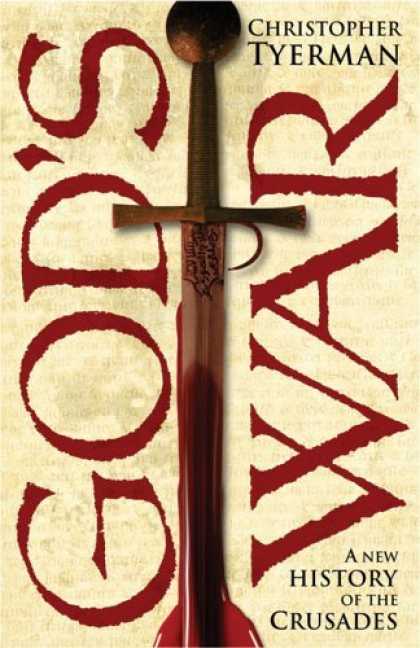 Christopher Tyerman's God's War: A New History of the Crusades. The bad news: We're fighting a war in the Middle East, one that is sadly tied with religion. The good news: The West tried this before. Even worse news: The West lost the first time. The best news: We don't have to repeat their mistakes. Tyerman's book is an excellently written and exciting account of the Crusades (all of them. All.) and a great way to begin a discussion on the current War on Terror from a more historical and cultural perspective.
Toni Morrison's Sula. This novel is perfect for college kids because it's about a friendship between two girls, Sula and Nel. One goes to college, one doesn't, and when the one who did returns, their relationship falls apart, but they still love each other. A cautionary tale for all those who left someone behind.
Willy Russell's Educating Rita. Another great story about college, but, again, from someone less privileged. Rita, a woman in her late twenties, tries to educate herself through England's Open University Program, and ends up also educating her well-off tutor.
Michael Frayn's Copenhagen. Like a lot of the books on this list, this one is of a play, not a novel or nonfiction work. It explores the issues of truth, responsibility and science: all important issues that affect college students, no matter where they go or what they study.
So here I present a little list of things I think incoming freshmen should read:
Jane Vincent Taylor's What Can Be Saved. I've never heard of a college assigning a book of poetry. (It turns students off, because poetry is apparently hard.) But Taylor's poetry here is one continuous story narrated through two of the character, Mother and Lovey. Mother is really an older woman caring for Lovey, a young woman with an unnamed condition. It's easy to forget that there are people out there who aren't so privileged and aren't lucky enough to get a college education, and here these characters are lovingly rendered.
Aeschylus's Prometheus Bound. A play about knowledge and who does and doesn't deserve it. Perfect for a discussion of the same problem.
Thomas Middleton and Thomas Dekker's The Roaring Girl. Another play, one from the time of the Shakespeare that isn't actually from Shakespeare. Everyone reads that man, but forgets that there were other playwrights working at the same time, and some of them also had interesting thoughts on issues like gender, as with this play, which deals with a crossdresser based on a real woman.
Toni Morrison's Sula. This novel is perfect for college kids because it's about a friendship between two girls, Sula and Nel. One goes to college, one doesn't, and when the one who did returns, their relationship falls apart, but they still love each other. A cautionary tale for all those who left someone behind.
Willy Russell's Educating Rita. Another great story about college, but, again, from someone less privileged. Rita, a woman in her late twenties, tries to educate herself through England's Open University Program, and ends up also educating her well-off tutor.
Michael Frayn's Copenhagen. Like a lot of the books on this list, this one is of a play, not a novel or nonfiction work. It explores the issues of truth, responsibility and science: all important issues that affect college students, no matter where they go or what they study.
Wednesday, July 7, 2010
Evolutionary Road

The article mentioned Ardi, a relatively recent find that is a million years older than the well-know Lucy fossil, who was found by one of the people featured in this article, Tim White. But what I liked about this article was its creative nonfiction tone. The author, Jamie Shreeve, went exploring for fossils, and discussed his or her impression along the way.
I'm interested in African culture, so the details about how the Afar, an people in the region the article explored, were the most interesting to me. The Afar are into pastoralism, they don't make their own tools, and the only modern thing they have access to are guns. They greet each other with something called a dagu, which is hand kisses and the exchange of news.
There are details even about these ancient people that I find really interesting. For example, Herto, a fossil, came from a people that clearly like to eat hippo, because the hippo bone in the area had clearly been nicked at with tools. A lot of discoveries also reveal how human and creative our ancestors were, with things like beads, bows, arrows, and metalwork. There are even specific names for the creations of some of these things, like Acheulean, which is the name of the stone-tool culture of Homo erectus. Tools were important, not just because they reveal creative minds behind them, but because they allowed hominids to compete with the other nearby predators, including lions and hyenas. They've also discovered a child's skill that reveals the flesh was carefully removed when still fresh and that it had been handled, possibly for generations, indicating that maybe it was being worshiped.
These discoveries are important because they often jive with theories based on things like genetics. For a long time, scientists believed that Homo sapiens, our species, came from one population living in Africa. The discovery of Herto and volcanic ash around him proved this to be correct.
Monday, July 5, 2010
Gwendolyn Brooks and Publishing
I was looking at some of the links from the article I posted yesterday, and I found Gwendolyn Brook's biography on the Poetry Foundation's website. I'm always looking to educate myself on poets, so I started reading.
Like a lot of cool poets out there, Brooks published with smaller presses, even though she didn't have to. Two of these included Third World Press, in Chicago and Broadside Press, which is located in my native city of Detroit. One of my favorite things is to discover smaller presses, because they're an interesting look at certain subjects within publishing. (In the case of both of these presses, they focus on publishing progressive works by African Americans and people of African descent.) Now I'll have to check these two presses out when I get a chance. The only bad thing is that I will inevitably find a ton of new books I want to buy, and I already have a list of books I need to read that could stretch to the moon.
Like a lot of cool poets out there, Brooks published with smaller presses, even though she didn't have to. Two of these included Third World Press, in Chicago and Broadside Press, which is located in my native city of Detroit. One of my favorite things is to discover smaller presses, because they're an interesting look at certain subjects within publishing. (In the case of both of these presses, they focus on publishing progressive works by African Americans and people of African descent.) Now I'll have to check these two presses out when I get a chance. The only bad thing is that I will inevitably find a ton of new books I want to buy, and I already have a list of books I need to read that could stretch to the moon.
Sunday, July 4, 2010
Poetry and Death go Together like Peanut Butter and Jelly
The Poetry Foundation has this great article up on their website called "Ghost Hunting with the Dead Poets Society of America" by Kathleen Rooney. Midway through the article, she mentions that all poets, whether living or not, are already dead, since their art is a dead one. It's true, but I had never thought of it that way. She goes on to say that "Poetry and death go together like peanut butter and jelly," which has got to be one of the funniest and bizarre lines about poetry I've ever heard. (But in a good way.)
I get the feeling that Ms. Rooney has had a hard time with live poets, because when she says "Dead poets typically won’t humiliate you for liking them, won’t betray your affection by overproducing second-rate work, or espousing unsavory political beliefs, or publishing something cheap and clever in the New Yorker" there's a tone there that sounds a little too much like someone trying to not talk about a breakup with the love of their life. Though, to be fair, I'm the same way. This past fall, The Red Cedar Review got the lovely Steve Healey as our faculty adviser. As he is a poet and I was the Poetry Editor, he went to be to see if he could get someone to write us a poem. (Someone famous, hopefully.) He asked me who I liked. I told him truthfully that a lot of the poets I liked best were dead. Healey, I suspect, appreciated the honesty.
I get the feeling that Ms. Rooney has had a hard time with live poets, because when she says "Dead poets typically won’t humiliate you for liking them, won’t betray your affection by overproducing second-rate work, or espousing unsavory political beliefs, or publishing something cheap and clever in the New Yorker" there's a tone there that sounds a little too much like someone trying to not talk about a breakup with the love of their life. Though, to be fair, I'm the same way. This past fall, The Red Cedar Review got the lovely Steve Healey as our faculty adviser. As he is a poet and I was the Poetry Editor, he went to be to see if he could get someone to write us a poem. (Someone famous, hopefully.) He asked me who I liked. I told him truthfully that a lot of the poets I liked best were dead. Healey, I suspect, appreciated the honesty.
Saturday, June 19, 2010
A Great Way to Fly
Another day, another Geraldine Heng article. This time it's "'A Great Way to Fly': Women, Nationalism, and the Varieties of Feminism in Southeast Asia.".
The article chronicles the ways in which nationalist movements and feminism interacted with one another in several Southeast Asian countries. The short and short of it is this: feminism was initially used by progressive groups, who later abandoned it once they were able to achieve power. It then discusses examples of the airline industry exploiting the images of Asian women being as stereotypically willing to serve and please men.
In Singapore, for example, legislators passed the Woman's Charter, which defined women in their relationship to their husbands and children, which is not the way women should be defined, since not all women want to marry or even want to marry men or want children. It wasn't a complete fail, since it did enfranchise them in some ways, but after the charter was passed, people no longer believed that women still had issues; they believed the problem had been "fixed." (This is also a problem around people in the U.S.)
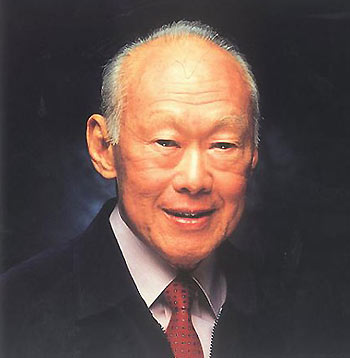 There was also a brief mention of how feminism interacts with things like race and class. In 1983, the Singapore Prime Minister Lee Kuan Yew believed that educated women would mean that women would refuse to have children, and that in not doing so, there would not be enough children to maintain class and racial elites. This is a great example of how anti-feminist rhetoric is part of a larger status quo-maintaining power system that also oppresses through race and class. Yew wants to oppress women so that it's easier to oppress those who are not of high class and undesirable race. Oppression works on a wide variety of factors, and that disrupting one works to disrupt the others.
The article mentions a lot of women leaders who I am unfamiliar with. Being the research junkie that I am, I tried to look some of them up. Many of these women don't have Wikipedia articles (even tiny ones). Sometimes if you search for them you can find small bits and pieces on the web, but it's very frustrating.
For example: Aishah Ghani was the first president of AWAS, a political party in Malaysia, and later on the president of UMNO's second women's wing, according to the article. I was able to find that she has a memoir, which went onto that long list of books I want to read. There are non-English Wikipedia pages and webpages on her that I was able to translate, which are helpful and illuminating, but I wish this kind of information was available in English, because it's certain Americans who need access to information like this on other countries, because we're so famously ignorant on events outside the United States. Also, it strikes me as an oversight of Wikipedia.
 It was even harder to find information on Sakinah Junid. I couldn't find any Wikipedia articles on her, not even the non-English kind. Junid was the president of the Parti Islam's women section. I found a book that mentioned her and what may be her own blog.
I was happy that someone has some info listed on Shamsiah Fakeh: she was the second president of AWAS, she was exiled from Malaysia, she has a memoir published in Chinese, she died in 2008.
I also love that Heng uses the word "fantasmatic," which is one of those great words that people don't use enough. She also uses the words "exegetes," which is someone who interprets a text, and "techne," which is a Greek word meaning someone who produces art with a particular goal in mind. Great words like that often make me want to write poetry.
The article chronicles the ways in which nationalist movements and feminism interacted with one another in several Southeast Asian countries. The short and short of it is this: feminism was initially used by progressive groups, who later abandoned it once they were able to achieve power. It then discusses examples of the airline industry exploiting the images of Asian women being as stereotypically willing to serve and please men.
In Singapore, for example, legislators passed the Woman's Charter, which defined women in their relationship to their husbands and children, which is not the way women should be defined, since not all women want to marry or even want to marry men or want children. It wasn't a complete fail, since it did enfranchise them in some ways, but after the charter was passed, people no longer believed that women still had issues; they believed the problem had been "fixed." (This is also a problem around people in the U.S.)
The article mentions a lot of women leaders who I am unfamiliar with. Being the research junkie that I am, I tried to look some of them up. Many of these women don't have Wikipedia articles (even tiny ones). Sometimes if you search for them you can find small bits and pieces on the web, but it's very frustrating.
For example: Aishah Ghani was the first president of AWAS, a political party in Malaysia, and later on the president of UMNO's second women's wing, according to the article. I was able to find that she has a memoir, which went onto that long list of books I want to read. There are non-English Wikipedia pages and webpages on her that I was able to translate, which are helpful and illuminating, but I wish this kind of information was available in English, because it's certain Americans who need access to information like this on other countries, because we're so famously ignorant on events outside the United States. Also, it strikes me as an oversight of Wikipedia.
It was even harder to find information on Sakinah Junid. I couldn't find any Wikipedia articles on her, not even the non-English kind. Junid was the president of the Parti Islam's women section. I found a book that mentioned her and what may be her own blog. I was happy that someone has some info listed on Shamsiah Fakeh: she was the second president of AWAS, she was exiled from Malaysia, she has a memoir published in Chinese, she died in 2008.
I also love that Heng uses the word "fantasmatic," which is one of those great words that people don't use enough. She also uses the words "exegetes," which is someone who interprets a text, and "techne," which is a Greek word meaning someone who produces art with a particular goal in mind. Great words like that often make me want to write poetry.
Wednesday, April 7, 2010
State News Article
As previously mentioned on the blog, I was interview for an article in The State News, which is the local paper here at MSU. Mostly, I sound like I know what I was talking about, though I wish she had chosen my more intelligent sound bites.
Tuesday, April 6, 2010
Interview
Last night, after I posted to you, I got an email from a State News reporter asking if she could interview me about "the Center for Poetry." I'm a shy person, so I wasn't really interested in being interviewed. My initial instinct was to say "no, I don't give interviews." But then I thought about the Center and how much they would appreciate my input, so I said yes.
When being interviewed today, it became clear that it was an interview about my research and my upcoming presentation. Oh. I mean, yes, I'm giving the talk for the Center for Poetry, but I was under the impression that she wanted to talk about what it was like working for them, not my other stuff.
Mostly, the interview went okay. I'll try to remember to post a link to the article once it comes out.
When being interviewed today, it became clear that it was an interview about my research and my upcoming presentation. Oh. I mean, yes, I'm giving the talk for the Center for Poetry, but I was under the impression that she wanted to talk about what it was like working for them, not my other stuff.
Mostly, the interview went okay. I'll try to remember to post a link to the article once it comes out.
Subscribe to:
Posts (Atom)