Recently, berfrois published this really interesting story about the drama surrounding the publication of The Catcher in the Rye. There are some really interesting details that both shed light on publishing and Salinger.
Salinger was actually lucky that he caught the attention of Robert Giroux, who was later on part of Farrar, Straus and Giroux, a massively influential publishing company. Giroux, like so many other good publishers, advocated for a work he believed in, even when people within his own company thought the work was about someone crazy.
This piece also notes, perhaps unintentionally, the strange and blurry line between publishers and writers. Salinger's comments about his own work, after all, prompt Giroux to ask him if Salinger should be a publisher, not a writer.
Salinger's reputation for being emotionally attached to the work is also confirmed in this piece, since the criticism of certain people clearly upset him. He did not want his picture to be included in the book jacket and he did not want to be sent any reviews or mentions in newspapers or magazines about his book. And even years earlier, he submitted his work stating that it would not be edited in any way. Salinger also apparently would not let them set review copies away to the press and refused to participate in its own promotion, which would probably be unheard of today for many writers. Most publishers would not even consider a book if the writer said they would not do any promotional work for it.
Showing posts with label stories. Show all posts
Showing posts with label stories. Show all posts
Friday, August 19, 2011

Saturday, July 16, 2011
Favianna's New Graphic Novel
Favianna Rodriguez, one of my favorite artists, is now in the process of working on a graphic novel talking about immigration. She recently received a grant from a foundation, but to receive it, she has to raise the same amount of money. For her, this means ten thousand dollars. Yikes.
I would love to see Rodriguez get this comic book out. She is a talented artist and her work has always been about telling stories about the oppressed and forgotten. Also, comic books rock.
I would love to see Rodriguez get this comic book out. She is a talented artist and her work has always been about telling stories about the oppressed and forgotten. Also, comic books rock.
Sunday, June 19, 2011
Lesbians in Shakespeare
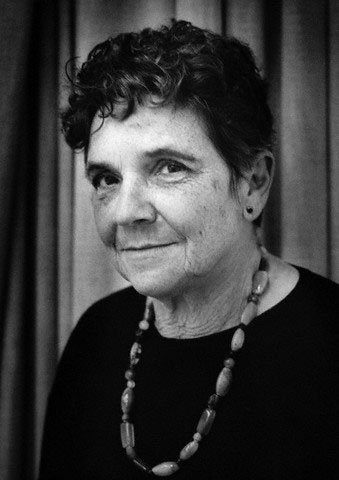
Using the colloquial definition of a lesbian, and not the one put forth by Adrienne Rich, the only characters who might actually be lesbians are Viola and Olivia. And even there it's hard to determine how much of Olivia's affections was based on Viola or her made-up persona, one that was meant to be a man. And then, of course, the question becomes one what that says about lesbian desires. It would be easy to conclude that Olivia likes the male persona but wouldn't want the female body that comes along with it, which could be interpreted to mean that lesbians secretly desire masculinity, which is problematic.
Hermione from A Winter's Tale, Cleopatra from Antony and Cleopatra, and Beatrice from Much Ado About Nothing could be involved with their female servants or friends, but the evidence that they were is circumstantial at best. I would be more convinced if there was some evidence that Shakespeare was inspired by historical events that involved women loving women or stories of women loving women, since so much of what Shakespeare wrote was based on other sources.

The Renaissance play that actually has one of the most interesting depictions of a woman who hangs out with other women is The Roaring Girl. This play, too, has a problematic set of ideas about gender and women's place in the world.
Friday, April 8, 2011
The Great Gatsby in 3D
 So finally, The Great Gatsby will be adapted, again, into a movie. As a literary nerd, I'm sure everyone's expecting me to be excited for it, and I would be, if I particularly liked the book. As a feminist, the book just strikes me as another rich white man writing a book that ignores anyone not white (rich, able, straight, etc.) and then vilifies women, because really, how dare Daisy spur Jay on for so long and then, once she does return his affections, how dare she cheat on Tom?
My other annoyance is that this novel is being adapted over other novels. The Great Gatsby was published in 1925. That same year, writers like Willa Cather, Dorothy Scarsborough, Sigrid Undset, Virginia Woolf, Zora Neale Hurston, and Gertrude Stein were publishing novels, and their works are so frequently ignored by the general public. (Academics still read some of these writers, but are mostly ignored by the general public. Most Americans have heard of The Great Gatsby; how many have heard of The Professor's House?) Moreover, there are other great writers from the same time period who were writing about the forgotten or were part of marginalized groups, like Kafka or Proust. Once again, a story of someone with immense privilege is given way more attention than the stories that in many ways deal with the lives of more than just a small few.
Monday, February 14, 2011
MLK Strikes Again

Comics are some of the best ways to communicate to the masses because of their format. As much as I love a good manifesto, political texts that are solely written often allienate the people, especially if the text is bogged down in political or philosophical jargon. This is why so many amazing movements have turned to art, especially in the form of posters, to express their ideas.
This is also a great example of how powerful and far-reaching the comic/graphic arts format can be.
Sunday, February 13, 2011
Hiroko Nagata's Picture
Reading the news recently, I came across this story about a revolutionary Japanese leader dying in jail. What gets me about this report is the image of this woman, Hiroko Nagata. As an art nerd, I'm always looking for a compelling image, and here is this woman, looking both beaten and defiant. Her gaze looks severe and unamused. Wow.
Sunday, January 23, 2011
Angels and Airwaves
This is a really fascinating trailer for a new science fiction movie called Angels and Airwaves. At first, it is just some astronauts in space. Okay. Then the power appears to go out on Earth. Oh. That could be really ugly. And terrifying, not just on Earth, but for those in the spaceship. This is going to be a thriller right? The kind where people sit around and get all jittery because their space station is probably the last refuge where people have some power?
And then the Civil War shows up. (Don't you wish you said that everyday? And then the Civil War shows up...) Let me tell you, as someone who spent a lot of childhood time around space-nuts: they are also almost always love the Civil War (also NASCAR, but that's another story altogether). At this point, this looks like the fantasy of certain male schoolmates of mine.
The last line "Does it bother you that we're not real?" is sort of great, and hopefully, an acknowledgement that this movie is taking place in character's minds.
Tuesday, October 5, 2010
The Social Network
I came upon this great little review of The Social Network. Although I haven't seen the movie yet, I've been reluctant to do so, since the trailer showed very few women and, as usual, in the service of men. Yawn. If I wanted to see stuff like that, I could just watch almost every mainstream movie, thanks.
At the end of the review, the author, Rebecca Davis O'Brien mentions that The Social Network probably only defines half of the generation. As someone who is loathe to admit that she's part of this generation, I find myself wondering the same thing: when is someone going to tell the story of my generation and my gender, since apparently we can't expect most stories to do both?
And then I find myself pondering other questions, most important this one: what is that story? Perhaps it is good for me to be thinking that women have such a wide variety of experiences that there is no good way to tell a story that is inclusive of all women in this age group. And maybe that's why I have a problem with The Social Network being hailed as the story of our generation in the first place: our experiences are too varied to be defined so narrowly, even if we pretend as if gender isn't a factor. (Or all the other things that are factors: race, sexuality, religion, etc.) Or this is just another round-about way of me saying that I am sick of movies that focus on privileged men and then hearing about how they somehow represent everyone, even though the world is made up of much more than just these men.
Tuesday, August 3, 2010
What to Read When You're a Freshmen
Slate has posted an article on what books incoming freshmen should read. As someone who has recently ended her undergraduate career, I feel like I have a sense of what these incoming freshmen look like, as I spent the last three years watching the freshmen coming in, and then previous to that, was one of those members of a strange breed.
So here I present a little list of things I think incoming freshmen should read:
 Sandra Cisneros's Woman Hollering Creek. A lot of schools would probably be tempted to assign Cisneros's better known novel, The House on Mango Street. There's nothing wrong with this novel, in fact, it's perfect and the sort of book a poet would like. But Woman Hollering Creek, a collection of short stories, looks at a larger group of mostly women, each struggling for a life that is there own and no one else's. Perfect for college kids looking to cut those strings and hopefully, a chance to talk about race, gender and immigration.
Jane Vincent Taylor's What Can Be Saved. I've never heard of a college assigning a book of poetry. (It turns students off, because poetry is apparently hard.) But Taylor's poetry here is one continuous story narrated through two of the character, Mother and Lovey. Mother is really an older woman caring for Lovey, a young woman with an unnamed condition. It's easy to forget that there are people out there who aren't so privileged and aren't lucky enough to get a college education, and here these characters are lovingly rendered.
Aeschylus's Prometheus Bound. A play about knowledge and who does and doesn't deserve it. Perfect for a discussion of the same problem.
Thomas Middleton and Thomas Dekker's The Roaring Girl. Another play, one from the time of the Shakespeare that isn't actually from Shakespeare. Everyone reads that man, but forgets that there were other playwrights working at the same time, and some of them also had interesting thoughts on issues like gender, as with this play, which deals with a crossdresser based on a real woman.
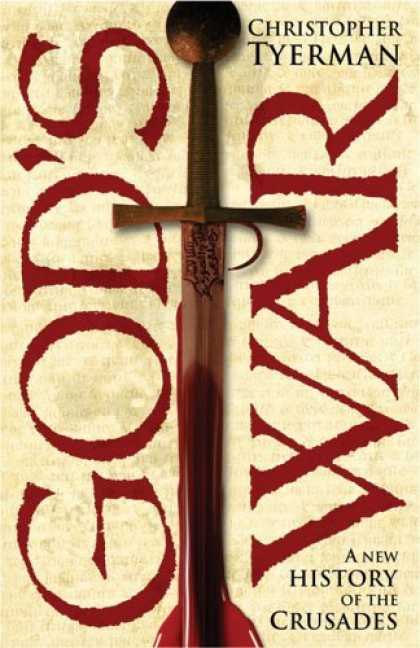 Christopher Tyerman's God's War: A New History of the Crusades. The bad news: We're fighting a war in the Middle East, one that is sadly tied with religion. The good news: The West tried this before. Even worse news: The West lost the first time. The best news: We don't have to repeat their mistakes. Tyerman's book is an excellently written and exciting account of the Crusades (all of them. All.) and a great way to begin a discussion on the current War on Terror from a more historical and cultural perspective.
Toni Morrison's Sula. This novel is perfect for college kids because it's about a friendship between two girls, Sula and Nel. One goes to college, one doesn't, and when the one who did returns, their relationship falls apart, but they still love each other. A cautionary tale for all those who left someone behind.
Willy Russell's Educating Rita. Another great story about college, but, again, from someone less privileged. Rita, a woman in her late twenties, tries to educate herself through England's Open University Program, and ends up also educating her well-off tutor.
Michael Frayn's Copenhagen. Like a lot of the books on this list, this one is of a play, not a novel or nonfiction work. It explores the issues of truth, responsibility and science: all important issues that affect college students, no matter where they go or what they study.
So here I present a little list of things I think incoming freshmen should read:
Jane Vincent Taylor's What Can Be Saved. I've never heard of a college assigning a book of poetry. (It turns students off, because poetry is apparently hard.) But Taylor's poetry here is one continuous story narrated through two of the character, Mother and Lovey. Mother is really an older woman caring for Lovey, a young woman with an unnamed condition. It's easy to forget that there are people out there who aren't so privileged and aren't lucky enough to get a college education, and here these characters are lovingly rendered.
Aeschylus's Prometheus Bound. A play about knowledge and who does and doesn't deserve it. Perfect for a discussion of the same problem.
Thomas Middleton and Thomas Dekker's The Roaring Girl. Another play, one from the time of the Shakespeare that isn't actually from Shakespeare. Everyone reads that man, but forgets that there were other playwrights working at the same time, and some of them also had interesting thoughts on issues like gender, as with this play, which deals with a crossdresser based on a real woman.
Toni Morrison's Sula. This novel is perfect for college kids because it's about a friendship between two girls, Sula and Nel. One goes to college, one doesn't, and when the one who did returns, their relationship falls apart, but they still love each other. A cautionary tale for all those who left someone behind.
Willy Russell's Educating Rita. Another great story about college, but, again, from someone less privileged. Rita, a woman in her late twenties, tries to educate herself through England's Open University Program, and ends up also educating her well-off tutor.
Michael Frayn's Copenhagen. Like a lot of the books on this list, this one is of a play, not a novel or nonfiction work. It explores the issues of truth, responsibility and science: all important issues that affect college students, no matter where they go or what they study.
Saturday, May 22, 2010
Mr. Fix-It
 Mr. Fix-It is a rom-com that attempts to be a sports story about car racing and a film about older people, but it just ends up being a hard-to-watch mess.
The movie follows Lance, played by David Boreanaz, a man who pretends to run a computer repair shop, but in reality is a front for his business fixing guys back up with their ex-girlfriends. Boreanaz charms these ex-girlfriends, then turns into something worse than his client to make his targets appreciate their last boyfriend, driving these women back into his client’s arms. It’s the sort of disgusting dribble that makes me even less interested in returning to my ex’s.
Predictably, Lance doesn’t believe in love. So, of course, as any rom-com narrative goes, he’s ripe to fall in love. And, also predictably, he falls for a conwoman who does the same thing he does: con people into getting back into their old relationships.
The movie was designed to be more likable to those who are disinterested in rom-coms: men. The main character, a man, spends time working toward his dream of racing cars. Most of the characters in this movie are male, save for Lance's love, Sophia, played by Alana de la Garza. But none of that makes up for the poor writing. The jokes are corny at best and fall completely flat. It even looks at times like the actors are confused by their own lines, as if they're preforming a play in a language they don't understand.
If anything, this movie might make men appreciate more mainstream rom-coms for at least creating coherent narratives.
Tuesday, April 27, 2010
The Little Princess
 The Little Princess is that older, Shirley Temple film following a young, wealthy woman during the Boer War, based on the novel of the same name. In the story, Temple's character, Sarah Crewe, enters a young ladies school run by the miserable spinster Miss Minchin. After her father is believed to be dead, Sarah becomes a servant at the school, begins living in the attic and is treated harshly by many of the other students. Sarah begins to visit a Veterans' Hospital, convinced that he is not dead.
What is most interesting in this film is race, or rather the lack of race. The Second Boer War took place in South Africa, and involved Africans, who were caught between Boers (of Dutch ancestry) and the British, who died as soldiers. It does not it mention the horrific concentration camps that were used as part of the British government's attempt to destroy the Boers, and, in turn, Africans. (Over 12% of Africans in these concentration camps died.) Not that you could ever guess all of that, watching this movie. The movie is entirely from the point of view of –you guessed it!- whit
 e people.
The film has Others in it and they're sidelined for the more important story of a young white woman. There’s Becky, the young maid that Temple’s Sarah befriends. In the newer version, she was depicted as a young black woman. In this movie, she’s white, though there’s something exotic about her looks, much like Sissy Jupe in Dickens's Hard Times. And, as always, her struggle is overlooked to tell the story of a Sarah, who has only recently began to see what real poverty is like, and ultimately gets out of it. There is also the character Ram Dass, the magical Other of the story. He somehow creates wonderful things for Sarah, helping her. No one ever helps or acknowledges the struggle of these two minority characters within the movie. They just exist to aid the narrative.
This film is enlightening in the sense that, if you're familiar with South African history, it shows how easily whitewashed stories can become.
Subscribe to:
Posts (Atom)